-
Whatsapp: +86 13526572721
-
Email: info@zydiamondtools.com
-
Address: AUX Industrial Park, Zhengzhou City, Henan Province, China
-
Whatsapp: +86 13526572721
-
Email: info@zydiamondtools.com
-
Address: AUX Industrial Park, Zhengzhou City, Henan Province, China

How to Choose the Right Tool Holder (Shrink Fit vs. Hydraulic vs. Collet) for PCD Tools?
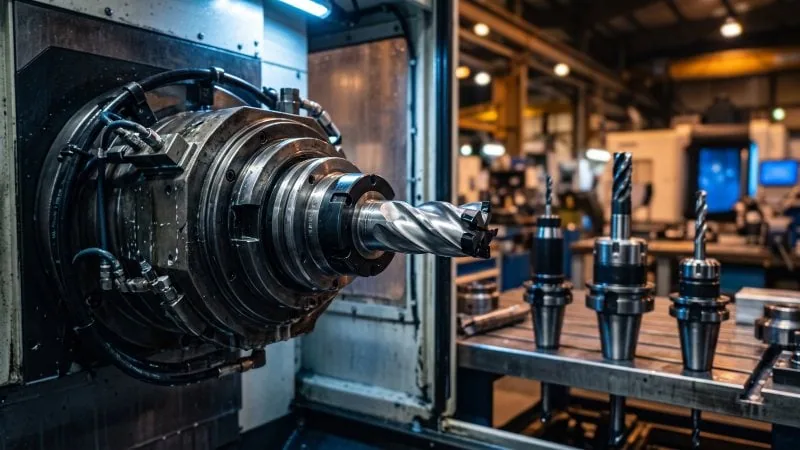
How do you select the ideal tool holder—between shrink fit, hydraulic, and collet chucks—to maximize the performance and longevity of Polycrystalline Diamond (PCD)1 tools?
To choose the right tool holder for PCD tools, select hydraulic chucks when exceptional vibration dampening and fast tool changes are needed to protect brittle edges; choose shrink fit holders for high-speed milling and tight clearance in deep cavity machining; and reserve collet chucks primarily for budget-sensitive, non-critical operations with lower precision demands.
Why Polycrystalline Diamond Demands Specialized Tool Holding
Polycrystalline Diamond (PCD) is incredibly hard but highly brittle, meaning it cannot absorb mechanical shocks. Consequently, it requires specialized tool holding to maintain near-zero runout2 and dampen machining vibrations, which ultimately prevents premature micro-chipping3 and uneven edge wear.
Controlling Runout to Prevent Uneven Edge Wear
Runout is the simple measurement of how far a tool wobbles off its true center axis as it spins. For standard carbide tools, a tiny amount of wobble might be acceptable. However, PCD tools are entirely different.
When runout occurs, the cutting load is no longer shared equally among all the flutes. Instead, one single cutting edge takes the brunt of the force. Think of this like an unbalanced grinding wheel; the high spot takes the entire impact every single revolution. Because PCD is extremely stiff, it cannot flex to accommodate this uneven pressure. The diamond edge will simply fail.
Therefore, controlling runout is critical for protecting your investment. For instance, industry data shows that reducing runout from 0.0006 inches (15 µm) to 0.0001 inches (2.5 µm) can increase tool life by up to 50%.
“Minimizing runout is not just about part accuracy; it is the primary defense mechanism against uneven PCD edge wear.”
Specific runout tolerances heavily depend on the exact spindle interface (such as HSK, CAT, or BT) and the manufacturing standards of the holder. Thus, you should always verify the exact runout specifications with your tooling supplier before making a purchase.
The Impact of Concentricity on Chip Load
If a multi-flute PCD end mill has poor concentricity, the chip thickness becomes highly inconsistent. A heavier chip load on one side increases localized heat and mechanical stress. Consequently, this leads to rapid, uneven edge wear.
Managing Vibration to Stop Premature Micro-Chipping
What happens when microscopic vibrations enter a diamond cutting edge? The result is almost always micro-chipping.
Vibration, often heard as chatter in the machine shop, acts like a series of rapid hammer blows against the cutting tool. You can compare this to a lathe tool crashing during an interrupted cut; the sudden, severe shock loads destroy the cutting insert. PCD is specifically engineered for extreme abrasion resistance, not for absorbing heavy impacts.
To fully understand why vibration is so destructive, look at the physical properties of different tooling materials.
| Tool Material | Hardness (Wear Resistance) | Toughness (Impact Resistance) | Failure Mode Under Vibration |
|---|---|---|---|
| High-Speed Steel | Low | Very High | Dull edge / Plastic deformation |
| Solid Carbide | High | Moderate | Chipping / Edge flaking |
| PCD | Extremely High | Very Low | Catastrophic micro-chipping |
As the table shows, PCD has very low toughness. Therefore, the tool holder must act as a shock absorber. It must isolate the brittle diamond insert from the harsh harmonic frequencies generated during milling or drilling. If the tool holder fails to dampen these vibrations, tiny microscopic pieces of the diamond edge will fracture and break away.
Ultimately, once micro-chipping begins, the tool’s surface finish capabilities instantly degrade. The damaged edge then generates even more heat and friction, which quickly spirals into complete tool failure. Proper tool holding stops this destructive cycle before it can start.
Optimal Applications for Shrink Fit Holders
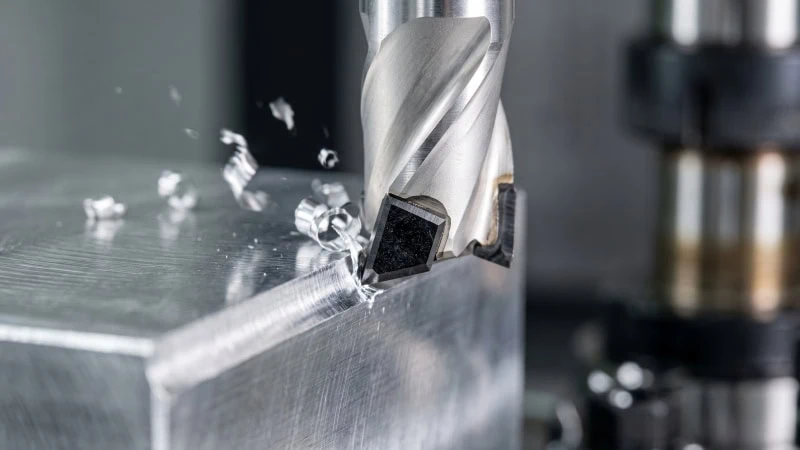
Shrink fit tool holders are the optimal choice for PCD operations that require a slim profile for deep cavity reach and perfect dynamic balance for high-speed milling. They use thermal expansion4 to grip the tool shank seamlessly, eliminating bulky mechanical parts and providing the highly rigid support needed for extreme spindle speeds.
Leveraging Slim Profiles for Deep Cavity Reach
Clearance is often the biggest hurdle in complex 5-axis machining. Standard tool holders use locking nuts and screws. These external parts add bulk to the holder assembly. Consequently, this bulk prevents the cutting tool from reaching deep inside intricate parts. Shrink fit holders solve this problem entirely.
Because they rely on thermal expansion, shrink fit holders grip the PCD tool directly. There are no moving parts. This creates a highly streamlined tool assembly. A shrink fit holder behaves much like a slender deep-hole gun drill passing smoothly through a tight guide bushing—it reaches deep into the workpiece without interference. In contrast, a bulky collet nut acts like an oversized indexing head that would instantly crash into the fixture. Therefore, a shrink fit holder slips past steep walls and tight workholding setups with ease.
“When machining deep aerospace5 pockets, the absence of a collet nut is the difference between a successful cut and a catastrophic spindle crash.”
Standard shrink fit holders often feature a narrow 3-degree or 4.5-degree external nose angle. However, geometry can vary greatly among manufacturers. You should always verify the exact profile dimensions using your CAM software simulation to ensure the holder clears your specific fixture safely.
Achieving Perfect Balance for High-Speed Milling
Why is tool holder symmetry so important when running PCD tools? The answer lies in the massive forces generated at high spindle speeds.
PCD tools are frequently used to machine aluminum components at very high RPMs. When an unbalanced tool holder spins at 30,000 RPM, it creates intense centrifugal forces6. These forces pull the tool off-center, causing severe vibration. As established earlier, vibration will instantly destroy a brittle diamond edge. Shrink fit holders are naturally symmetrical. They consist of a single, solid piece of steel. This unified design inherently provides perfect dynamic balance.
For example, many premium shrink fit holders easily maintain a G2.5 balance rating at 25,000 RPM. This perfect balance ensures a smooth cutting action. As a result, the PCD cutting edge receives a consistent chip load, which drastically improves surface finish.
Accounting for the Hidden Costs of Induction Heating Units
Shrink fit holders offer incredible performance, but they require a significant upfront investment. The tool holders themselves are relatively inexpensive. However, you cannot use them without a specialized induction heating machine.
This equipment uses electromagnetic induction7 to rapidly heat the metal holder. The heat makes the holder expand just enough to insert the PCD tool. Afterward, the holder must be actively cooled down. This process introduces several hidden costs that impact your overall machining budget.
| Cost Category | Description of Expense | Impact on Operations |
|---|---|---|
| Induction Machine | The base unit required to heat the tool holders. | High initial capital expense. |
| Cooling Accessories | Cooling sleeves and liquid chillers to speed up tool changes. | Adds to equipment footprint and maintenance. |
| Energy Consumption | The high electrical draw needed to generate instant, intense heat. | Increases daily operational utility costs. |
| Operator Training | Time spent training staff to handle heated tooling safely. | Temporary reduction in shop floor productivity. |
Furthermore, the heating and cooling cycle takes time. Even with modern cooling sleeves, you must wait for the metal to return to room temperature. Therefore, if your shop requires continuous, rapid tool changes at the machine, this delay can interrupt production flow. Carefully weigh these equipment costs against the specific performance benefits your PCD tools need.
Maximizing PCD Tool Life with Hydraulic Chucks
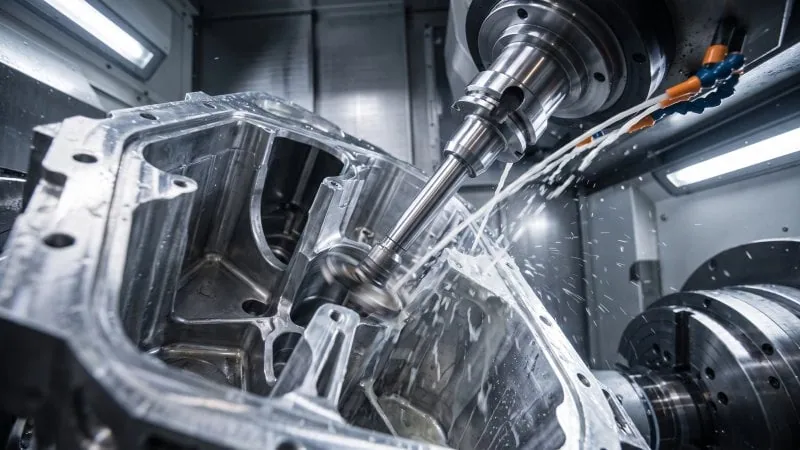
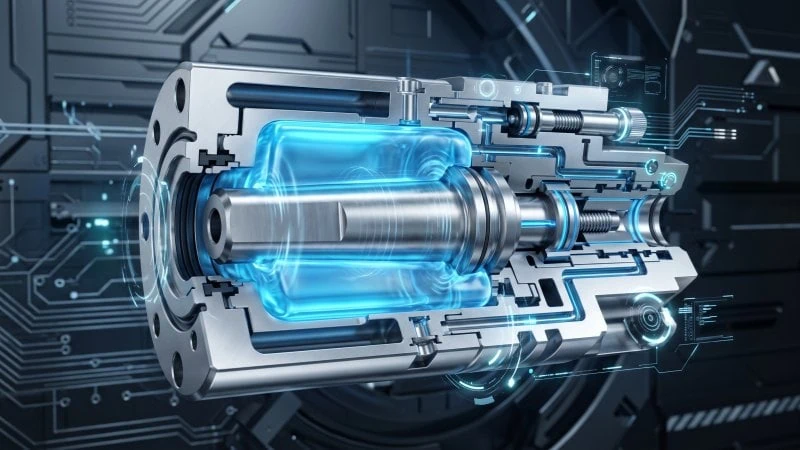
Hydraulic chucks maximize PCD tool life by utilizing internal, pressurized fluid chambers to absorb and dampen machining vibrations. This unique fluid mechanism acts as a built-in shock absorber, stopping the harmonic shocks that cause brittle diamond edges to fracture, while simultaneously delivering exceptional runout accuracy.
How Internal Fluid Dampening Protects Brittle Cutting Edges
As established earlier, PCD inserts are extremely hard but highly brittle. Consequently, they cannot handle physical impact. When a spinning milling cutter engages a workpiece, it creates continuous harmonic vibrations. If you use a rigid solid steel holder, those vibrations travel directly into the fragile diamond edge. However, a hydraulic chuck works completely differently.
Think of this internal fluid chamber like a hydraulic steady rest supporting a long, slender shaft on a lathe. The hydraulic steady rest actively absorbs the turning vibrations to prevent chatter. Similarly, the pressurized oil inside the chuck absorbs the milling vibrations. This internal fluid membrane acts as a protective buffer. Therefore, it prevents microscopic shockwaves from ever reaching and fracturing the PCD tool.
“Vibration is the ultimate enemy of diamond tooling; internal fluid dampening serves as its absolute strongest shield.”
Industry case studies clearly demonstrate this benefit. For instance, in aluminum automotive8 part finishing, switching to fluid-damped holders has been shown to increase PCD tool life by up to 300%. Ultimately, less vibration means the tool cuts smoothly, preserving the razor-sharp edge for much longer.
Rapid Tool Change Advantages Without External Equipment
Another major operational advantage is the rapid setup speed directly at the CNC machine. You absolutely do not need any external power equipment. Instead, the entire clamping process is entirely self-contained.
You simply slide the tool shank into the holder’s bore. Next, you turn a single actuation screw using a standard hex wrench. This simple mechanical action pushes an internal piston. Consequently, the piston pressurizes the hydraulic fluid, which instantly clamps the tool.
This straightforward process takes mere seconds to complete. Furthermore, it allows operators to swap tools safely without leaving the machine zone.
| Feature | Hydraulic Chuck | Operational Advantage |
|---|---|---|
| Actuation Method | Single hex screw | No electrical power or external devices needed. |
| Tool Change Time | Under 10 seconds | Drastically maximizes machine uptime. |
| Operator Safety | Cold mechanical clamping | Eliminates extreme heat and burn risks. |
Maintaining Clamping Force in Continuous Production
Once clamped, the internal fluid creates an aggressive, 360-degree grip around the entire tool shank. This uniform pressure ensures excellent concentricity. Furthermore, it maintains a highly consistent clamping force throughout continuous production runs.
The sealed hydraulic system evenly distributes the gripping pressure across the entire clamping surface. As a result, the tool remains completely secure and perfectly centered. This consistent grip prevents micro-movements during the cutting cycle.
However, specific clamping torque limits and maximum RPM ratings can vary significantly based on the internal membrane design. Hydraulic chucks can sometimes lose gripping force at ultra-high speeds due to the centrifugal expansion of the fluid. Therefore, you should always verify the exact torque specifications and RPM limits with your tool holder supplier to ensure they safely match your application.
Ultimately, this reliable clamping force guarantees highly stable cutting conditions. Stable cutting conditions directly translate into predictable tool wear and superior part quality.
Assessing Mechanical Collet Chucks for Diamond Tooling
Mechanical collet chucks offer exceptional versatility, but they generally lack the ultra-precise runout and dampening characteristics required to maximize PCD tool life. While standard ER collets are adequate for non-critical applications, their stacked mechanical tolerances often introduce excessive runout that can prematurely fracture brittle diamond cutting edges.
Identifying Runout Limitations in Standard ER Systems
Standard ER collet9 systems rely on a multi-piece assembly. They use a slotted spring-steel10 sleeve compressed by a threaded nut. Consequently, this multi-part design naturally suffers from tolerance stacking11. The holder body, the compressible collet, and the locking nut all have their own manufacturing variations.
When you assemble these three parts, those tiny errors multiply. You can compare this to building a modular workholding fixture on a milling table. Every spacer plate or riser block you add introduces a tiny new margin of error to the final setup. Similarly, the collet assembly stacks these tiny deviations. This stacking pushes the PCD tool slightly off-center.
“Tolerance stacking in multi-piece tool holders directly translates to uneven chip loads and accelerated PCD edge wear.”
Standard ER collets might guarantee a runout of 0.0004 inches (10 µm) at the nose. However, specialized precision collets can drop this to 0.0002 inches (5 µm). Because specific runout classes vary widely among manufacturers, you should always select UP-grade (Ultra-Precision) collets and verify their certified runout specifications to ensure they meet your machining tolerances.
Mitigating Human Error and Inconsistent Torque Application
Beyond mechanical design, standard collet chucks rely heavily on human operation. If an operator uses a standard crescent wrench to tighten the nut, the clamping force becomes completely unpredictable.
Uneven or excessive tightening twists the spring-steel collet. As a result, this twist forces the tool shank off-center. This drastically increases runout at the cutting tip. Conversely, under-tightening allows the expensive PCD tool to slip or pull out during a heavy cut.
To mitigate these severe risks, CNC shops must enforce strict setup procedures:
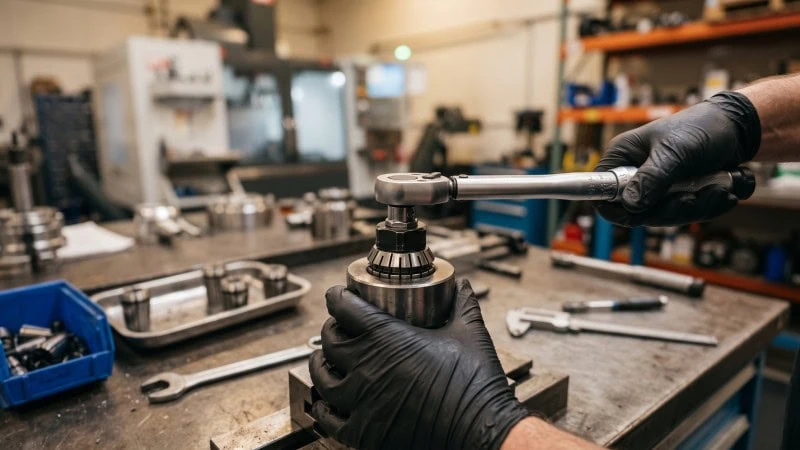
- Mandatory Torque Wrenches: Always use a properly calibrated torque wrench12 for every single tool change.
- Clean Mating Surfaces: Debris inside the collet pocket acts like a wedge. It instantly destroys concentricity.
- Routine Collet Replacement: Spring steel loses its elasticity over time. Operators must replace collets after regular cycles to maintain gripping force.
By controlling the physical torque, operators can keep the collet sleeve perfectly symmetrical. Therefore, this prevents unnecessary tool wobble.
Practical Use Cases for Collets in Budget-Restricted Operations
Despite their clear limitations with brittle diamond, collet chucks remain widely used. They are incredibly cost-effective. One single holder body can accept dozens of different collet sizes. Therefore, they offer unmatched versatility for operations with strict tooling budgets.
If your shop cannot invest in advanced hydraulic or thermal shrink systems, you can still use collets strategically. They work well in specific, low-impact PCD applications.
| Application Type | Suitability for Collet Chucks | Typical Material Milled |
|---|---|---|
| High-Precision Aerospace | Poor | Structural Aluminum |
| Heavy Automotive Roughing | Marginal | Cast Aluminum Alloys |
| General Woodworking/Routing | Excellent | MDF, Plywood, Composites |
| Basic Plastic Trimming | Good | Acrylic, Polycarbonate |
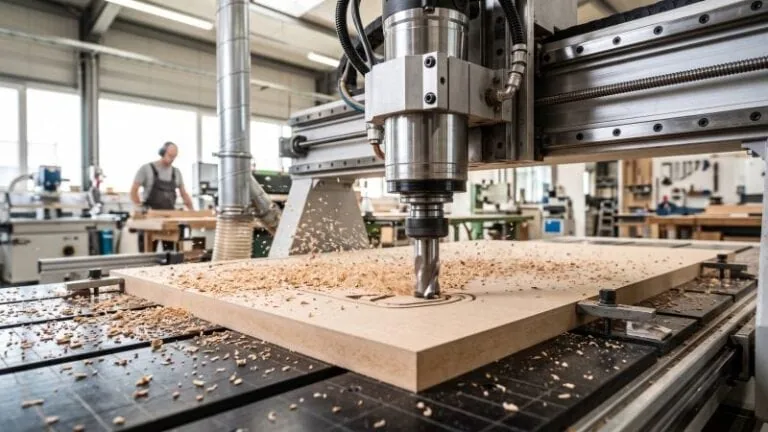
For instance, routing highly abrasive MDF13 panels with PCD router bits is a perfect use case. In this industry, the material severely wears down standard carbide. Therefore, PCD is necessary for abrasion resistance. However, routing wood does not demand the extreme micro-micron runout tolerances of aerospace metalworking. In these specific, budget-restricted scenarios, collet chucks provide a perfectly acceptable return on investment.
Total Cost of Ownership and Final Selection Criteria
You determine the total cost of ownership14 by weighing the initial purchase price of the tool holder system against the long-term savings from extended PCD tool life. Ultimately, the correct choice perfectly balances these financial metrics with the specific physical demands of your CNC machining environment.
Comparing Upfront Holder Costs vs. Long-Term Tool Replacement
Polycrystalline diamond tools require a significant financial investment. A single specialized PCD end mill can easily cost several hundred dollars. Therefore, you must look beyond the initial price tag of the tool holder.
Many shops make the mistake of buying cheap holders to save money upfront. However, this strategy almost always backfires. You can compare this to mounting a cheap, unbalanced grinding wheel onto a highly precise, million-dollar cylindrical grinder. The cheap wheel will vibrate, instantly ruining the surface finish and damaging the expensive machine spindle. Similarly, a cheap holder will vibrate and instantly chip your expensive PCD edge.
When a cheap holder destroys a PCD tool prematurely, your tooling costs skyrocket. You must constantly buy replacement cutters. Furthermore, you lose valuable production time during frequent tool changes.
“Investing in a premium tool holder is actually an investment in tool life insurance.”
Let us look at a practical cost comparison over a typical production year.
| Tool Holder Strategy | Initial Setup Cost | PCD Tool Replacements Needed | Total Annual Cost |
|---|---|---|---|
| Standard Collet Chuck | Very Low | High (Due to micro-chipping) | Highest |
| Hydraulic Chuck | Moderate | Low (Excellent dampening) | Lowest |
| Shrink Fit System | Very High (Requires heater) | Low (Excellent rigidity) | Moderate |
As the table demonstrates, spending more on a premium holder greatly reduces your long-term tool replacement costs. The upfront expense pays for itself very quickly through extended tool life and uninterrupted machining cycles.
Matching Tool Holder Capabilities to Specific CNC Environments
Cost is only one part of the equation. You must also match the tool holder to your specific workshop environment. Every CNC machine and production line has different operational demands.
For high-volume automotive production, uptime is everything. Automotive plants machine thousands of cast aluminum engine blocks daily. In this environment, operators need fast, reliable tool changes right at the machine. Therefore, hydraulic chucks are usually the best choice. They offer rapid setup and excellent vibration dampening for mass production.
Conversely, aerospace manufacturing presents entirely different challenges. Aerospace shops often machine complex, deep structural pockets on 5-axis milling centers. They require absolute maximum clearance. In this environment, thermal shrink fit holders are the only viable option. Their slim profile easily navigates tight spaces without crashing.
To make the final selection, evaluate these three specific environmental factors:
- Machine Spindle Limits: High-speed spindles demand perfect balance.
- Part Complexity: Deep cavities require slim holder profiles.
- Operator Skill Levels: Simple mechanical actuation prevents human setup errors.
Keep in mind that exact tool holder capabilities, such as drawbar pull-stud requirements, will vary between different machine tool builders. You should always verify these specific operational parameters with your machine supplier to ensure complete compatibility.
Conclusion
Selecting the right tool holder for polycrystalline diamond tools comes down to protecting a high-value cutting investment. Because PCD is extremely hard yet susceptible to impact damage, the holder must actively combat runout and vibration.
Hydraulic chucks provide the highest protection through fluid dampening, making them ideal for standard high-precision milling and mass production. Shrink fit holders excel in high-speed, deep-reach applications where slim profiles and dynamic balance are mandatory. While collet chucks offer low upfront costs, their susceptibility to runout limits their role primarily to non-critical or woodworking tasks. By aligning holder performance with your specific machining environment and total cost of ownership, you ensure maximum tool life, superior surface finish, and optimized production efficiency.
References
- Polycrystalline Diamond (PCD)1 – ZYDiamondTools comprehensive guide covering all you need to know about Polycrystalline Diamond (PCD) tools.
- Runout2 – ZYDiamondTools article explaining tool runout, its causes, effects on tool life, and proven solutions.
- Micro-chipping3 – ZYDiamondTools blog post on how to solve abrasion, breakage, and micro-chipping of PCD cutting tools.
- Thermal Expansion4 – Wikipedia article detailing the physics and principles of thermal expansion.
- Aerospace5 – ZYDiamondTools insight on why PCD tools are essential for aerospace machining and how to select them.
- Centrifugal Forces6 – Wikipedia article explaining the mechanics of centrifugal force in rotating bodies.
- Electromagnetic Induction7 – Wikipedia page defining electromagnetic induction and its applications.
- Automotive8 – ZYDiamondTools guide uncovering the benefits and applications of PCD tools for automotive production lines.
- ER Collet9 – Wikipedia overview of collets, including standard ER collet systems used in machining.
- Spring-Steel10 – Wikipedia article covering the properties and uses of spring-steel alloys.
- Tolerance Stacking11 – Wikipedia explanation of tolerance analysis and tolerance stacking in mechanical engineering assemblies.
- Torque Wrench12 – Wikipedia guide on the function, types, and importance of using a torque wrench.
- MDF13 – Wikipedia resource explaining Medium-density fibreboard (MDF) materials and machining characteristics.
- Total Cost of Ownership14 – ZYDiamondTools guide explaining the Total Cost of Ownership (TCO) for superhard tooling and abrasives.