-
Whatsapp: +86 13526572721
-
Email: info@zydiamondtools.com
-
Address: AUX Industrial Park, Zhengzhou City, Henan Province, China
-
Whatsapp: +86 13526572721
-
Email: info@zydiamondtools.com
-
Address: AUX Industrial Park, Zhengzhou City, Henan Province, China

Diamond-Coated vs PCD End Mills for Zirconia Crown Milling
Which tooling option offers the best performance and cost-efficiency for dry milling zirconia dental crowns: diamond-coated or solid PCD end mills?
The choice between diamond-coated and solid Polycrystalline Diamond (PCD) end mills1 depends entirely on your laboratory’s production volume and efficiency goals. While diamond-coated tools provide an accessible entry point with excellent initial cutting sharpness, solid PCD end mills deliver vastly superior tool longevity, sustained margin precision, and a significantly lower long-term cost per crown for high-volume automated CAD/CAM environments.
Tool Life and Wear Resistance Analysis
What exactly determines how long an end mill lasts when cutting hard dental zirconia?
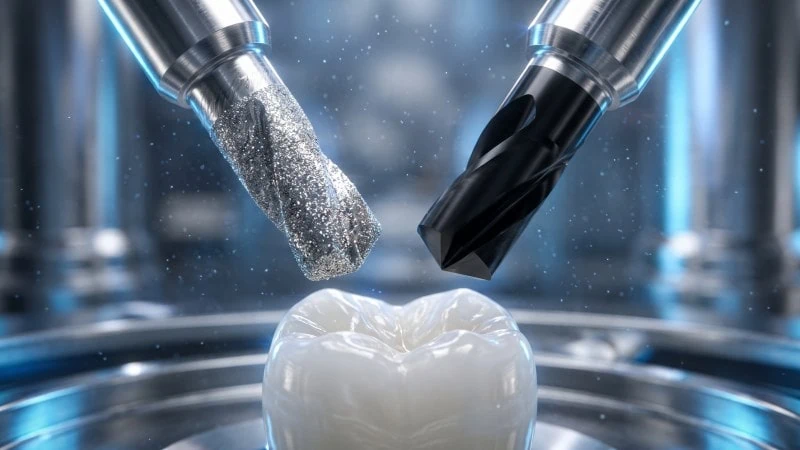
Tool life in zirconia milling is primarily dictated by the tool’s abrasion resistance against highly abrasive zirconium oxide dust. Diamond-coated tools use a thin, protective layer over a carbide core to delay wear. Meanwhile, Polycrystalline Diamond (PCD) tools feature a solid diamond matrix that provides vastly superior longevity and continuous sharp edges before the tool fails.

Tool Wear Mechanisms in Zirconia Dry Milling
Why do tools wear out so fast when cutting zirconia? Dental labs mill zirconia in its pre-sintered, or “green,” state. In this state, the material feels soft like chalk. However, it is actually incredibly abrasive.
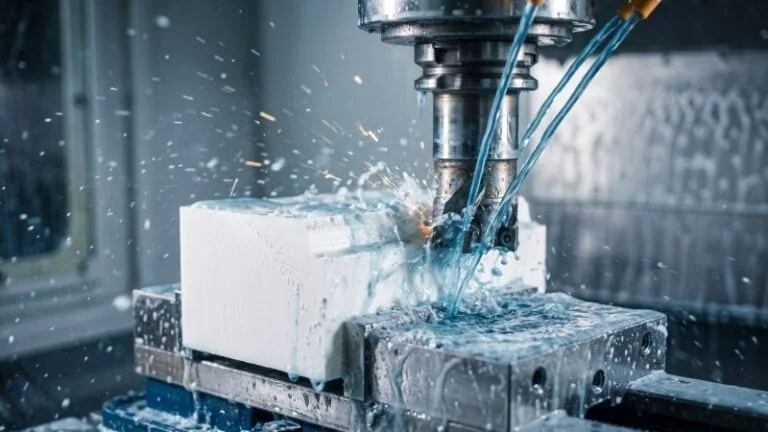
During dry milling, the machine cuts without liquid coolant. This prevents liquid from soaking into the porous zirconia block. Consequently, the cutting process creates a massive amount of fine, abrasive dust. This dust acts much like loose grinding grit in a sandblasting cabinet. As the spindle spins at 60,000 to 100,000 RPM, the abrasive dust constantly rubs against the tool flutes.
This extreme friction leads to specific types of tool degradation:
- Abrasive Wear: The constant rubbing of zirconia dust slowly grinds away the tool’s cutting edge.
- Coating Delamination: Intense heat and friction can cause thin coatings to peel away from the base carbide material.
- Micro-Chipping: As the tool dulls, cutting forces increase drastically. This added stress can snap tiny pieces off the cutting edge.
Performance Metrics of Diamond-Coated Flutes
How do diamond-coated end mills hold up against this abrasive dust? Manufacturers create these tools by growing a thin layer of crystalline diamond over a standard tungsten carbide end mill. This process is usually done using Chemical Vapor Deposition (CVD)2.
This coating acts as a hardened shield. It drastically slows down the abrasive wear caused by zirconia dust. A standard uncoated carbide tool might only last for 30 to 50 dental crowns. In contrast, a quality diamond-coated tool can typically mill between 300 and 500 crowns before wearing out.
Technical Specifications of Coated Tools
The thickness of the diamond coating plays a massive role in tool life. Typical dental coatings range from 5 to 15 microns thick. Thicker coatings last longer, but they can round off the sharp cutting edge. Conversely, thinner coatings keep the edge sharp but wear through much faster. Since coating thickness and structural bonding vary significantly by manufacturer, you should always verify the exact coating specifications with your supplier.
| Tool Feature | Standard Carbide | Diamond-Coated Carbide |
|---|---|---|
| Surface Hardness | 1,500 – 2,000 HV | 8,000 – 10,000 HV |
| Average Crown Yield | 30 – 50 Units | 300 – 500 Units |
| Wear Mode | Rapid edge rounding | Slow coating degradation |
Once the thin diamond layer wears through, the exposed carbide core degrades instantly. At this point, the tool is completely dead and must be replaced immediately.
Lifespan Characteristics of Solid PCD Tooling
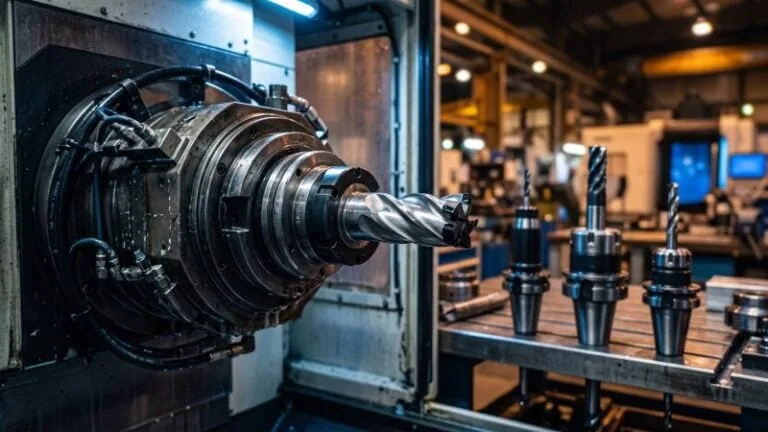
What if the tool never lost its hard coating? That is the exact concept behind Polycrystalline Diamond (PCD) tooling. Instead of a thin coating over carbide, a PCD tool features a solid diamond wafer brazed directly onto a carbide shank. Manufacturers then use lasers or electrical discharge machining (EDM) to cut the flutes directly into the solid diamond.
This structural difference changes everything. It is similar to comparing a solid carbide end mill3 to a standard coated high-speed steel (HSS) tool in traditional metalworking. When the thin top coating of the HSS tool wears off, the softer steel core quickly degrades. The solid carbide tool, however, remains hard throughout its entire core. Similarly, a PCD tool remains solid diamond no matter how much it wears down.
“Because the cutting edge is composed entirely of interconnected diamond particles, PCD tools simply do not suffer from coating delamination.”
Extreme Crown Yields
Due to this solid structure, PCD end mills deliver extreme longevity. A standard PCD tool can easily mill between 3,000 and 5,000 zirconia crowns before needing replacement. Some high-end PCD tools even reach up to 10,000 units under perfect dry milling conditions. Specifically, the tool slowly loses its geometric tolerance over thousands of cycles, rather than failing suddenly from a peeled coating.
As a result, dental labs running continuous, automated milling machines often prefer PCD. The solid diamond structure provides reliable, predictable tool wear over an exceptionally long lifespan.
Machining Precision and Margin Quality
How do diamond-coated and solid PCD end mills directly impact the final fit and finish of a milled zirconia restoration?
The choice between diamond-coated and solid PCD end mills dictates the cutting edge sharpness and structural stability during the milling process. Diamond-coated tools offer an exceptionally sharp initial edge ideal for intricate anatomical details, but this sharpness degrades as the coating wears. Conversely, solid PCD tools maintain a highly stable cutting geometry over thousands of cycles, ensuring consistent margin thickness and minimizing the need for manual post-sintering surface adjustments.
Preventing Micro-Fractures at Crown Margins
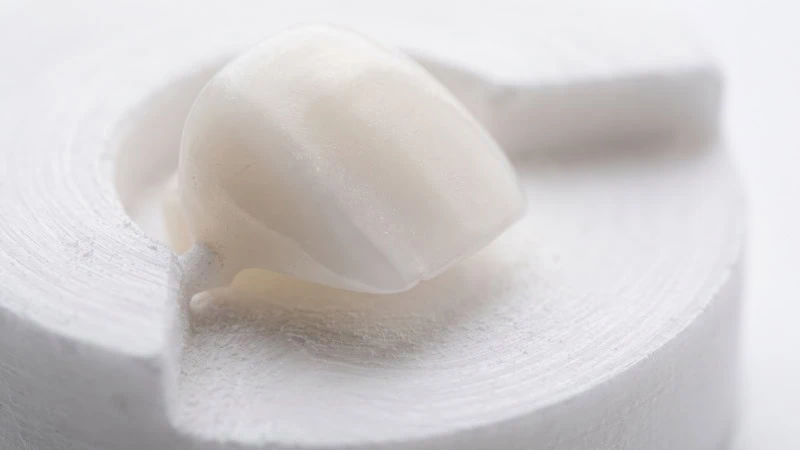
Why do crown margins often chip during the dry milling process? In its pre-sintered state, zirconia4 is highly brittle. Dental technicians often push machines to mill extremely thin restoration margins, sometimes down to 0.2mm or 0.3mm.
At these ultra-thin dimensions, the cutting tool must slice through the material cleanly. If the tool is blunt, it pushes and tears the zirconia instead of cutting it. This excess physical pressure creates tiny cracks, known as micro-fractures, along the crown’s edge.
Diamond-coated end mills perform flawlessly when brand new. The thin Chemical Vapor Deposition (CVD) coating preserves the sharp geometry of the underlying carbide. This sharpness translates to very low cutting forces. Therefore, fresh diamond-coated tools produce crisp, chip-free margins. However, as the abrasive zirconia dust wears the coating away, the tool quickly becomes blunt. This sudden dulling causes a spike in cutting pressure, which leads directly to margin chipping.
PCD end mills handle this challenge differently. Manufacturers shape the solid diamond matrix using wire EDM5 processes, creating a highly rigid, monolithic cutting structure. Unlike a coated tool that changes its friction coefficient the moment the coating breaches, the solid PCD tool maintains its exact cutting geometry and low friction over a massive volume of work. Because a PCD tool never suffers from sudden coating delamination, the cutting forces remain consistently low. This stability virtually eliminates unpredictable micro-fractures on delicate margins over the tool’s entire lifespan.
Surface Finish and Post-Sintering Adjustments
How does the tool type affect the amount of hand-polishing required later? The surface finish of a green zirconia block directly influences the final sintered crown. If a tool leaves deep milling grooves, technicians must spend valuable time manually grinding and polishing the hardened crown.
Diamond-coated flutes create an incredibly smooth surface finish during their optimal lifespan. The sharp cutting action shears the zirconia cleanly, leaving minimal tooling marks. Yet, this high-quality finish degrades exactly in tandem with the coating wear.
Solid PCD tooling provides a distinct advantage in surface consistency. Because the diamond structure wears at a microscopic, even rate, the surface roughness6 of the milled crowns remains uniform from the first unit to the thousandth. Dental labs can predict their exact post-processing times because every crown comes out of the machine looking identical.
Keep in mind that optimal surface finishes heavily depend on your exact CAM software strategies. Specific stepdown rates and spindle speeds will vary based on the tool’s diameter and the machine’s overall rigidity.
| Feature | Diamond-Coated End Mills | Solid PCD End Mills |
|---|---|---|
| Initial Margin Sharpness | Excellent | Excellent |
| Long-Term Margin Stability | Decreases with coating wear | Highly consistent |
| Risk of Micro-Fractures | High (near end of tool life) | Very Low |
| Surface Finish Consistency | Variable | Uniform |
“Predictable surface roughness out of the milling machine directly reduces the manual labor required after the sintering furnace.”
By understanding how these tools interact with brittle zirconia, dental labs can dramatically reduce their scrap rates. Choosing the right tool ensures that delicate margins survive the milling process intact.
Calculating Cost Per Crown and ROI
How do you determine whether the high upfront cost of premium dental milling tools actually saves your laboratory money in the long run?
To calculate the true Return on Investment (ROI)7 for zirconia milling tools, dental labs must evaluate the initial purchase price against the total number of crowns successfully milled, while also factoring in the hidden costs of machine downtime. Although solid PCD end mills require a much higher initial investment than diamond-coated alternatives, their massive production yield ultimately delivers a significantly lower cost per unit for high-volume dental laboratories.

Initial Acquisition Pricing Differences
When outfitting a dental milling machine, the initial price tag often drives immediate purchasing decisions. Diamond-coated end mills are highly accessible. A standard diamond-coated zirconia milling tool typically costs between $90 and $130. This lower price point makes them very attractive for smaller labs. It requires less upfront capital to stock a full magazine of different tool diameters.
On the other hand, solid Polycrystalline Diamond (PCD) end mills demand a serious financial commitment. A single PCD tool generally ranges from $400 to $600. Therefore, outfitting an entire tool magazine with PCD can easily cost thousands of dollars.
We can compare this to buying workholding fixtures in a traditional CNC machine shop. A standard mechanical vise is cheap and gets the job done for basic runs. However, a zero-point pneumatic clamping system costs ten times as much upfront. The high-end system is an investment designed purely to reduce setup time and maximize long-term output. Similarly, buying a PCD tool is an upfront investment in long-term production capacity.
Impact of Tool Change Frequency on Machine Downtime
The purchase price is only one part of the financial equation. Machine downtime is incredibly expensive. Whenever a spindle stops spinning, the lab stops making money.
Diamond-coated tools wear out much faster than PCD tools. Therefore, the machine operator must replace them frequently. Every time a tool reaches its lifespan limit, the machine must halt. The operator has to open the machine, swap the tool, and run a laser calibration sequence. This process usually takes about 10 to 15 minutes.
If a lab produces thousands of crowns a month, those 15-minute stops add up quickly.
- Lost Spindle Time: Frequent stops reduce the total number of crowns a machine can produce in a single shift.
- Lights-Out Manufacturing Risks: Many large labs run machines overnight using automated disc changers. If a diamond-coated tool fails at 2:00 AM, the machine stops entirely. The lab loses hours of unattended production.
- Labor Costs: Technicians must spend paid hours managing tool libraries and physically changing bits instead of designing cases.
Because PCD tools last significantly longer, they virtually eliminate these constant interruptions. The machine runs continuously, maximizing your equipment ROI.
Comprehensive Long-Term Cost Efficiency
To find the most cost-effective solution, you must calculate the exact cost per crown. You do this by dividing the initial tool price by the total number of units it mills.
Let us look at a realistic production scenario for a standard dental laboratory.
| Cost Metric | Diamond-Coated End Mill | Solid PCD End Mill |
|---|---|---|
| Average Initial Price | $100.00 | $500.00 |
| Estimated Crown Yield | 400 Units | 5,000 Units |
| Actual Cost Per Crown | $0.25 | $0.10 |
“Evaluating tooling based purely on the catalog price ignores the massive financial impact of production efficiency and consumable yields.”
As the table shows, the PCD tool costs five times more upfront. However, it yields over ten times the production volume. Consequently, the actual cost to mill a single crown drops by 60%.
For a high-volume milling center producing 10,000 units a year, switching to PCD tooling could save roughly $1,500 annually per machine in pure consumable costs alone. When you add the value of reclaimed machine uptime, the financial benefit grows even larger. Smaller labs with low volume might still prefer the friendly cash flow of diamond-coated tools. Yet, for any facility focused on automated, continuous milling, PCD offers unmatched long-term cost efficiency.
Conclusion
Upgrading your dental laboratory’s milling strategy requires balancing immediate equipment costs with long-term production yields. While diamond-coated end mills provide an excellent entry point for smaller operations with their accessible pricing and sharp initial cuts, solid PCD tooling stands as the definitive choice for maximizing uptime. By drastically reducing tool changes, eliminating sudden margin chipping, and lowering the actual cost per crown, PCD end mills enable highly automated workflows to run at peak profitability. For more tailored solutions regarding your dental CAD/CAM tooling operations, please contact us.
References
- Polycrystalline Diamond (PCD) end mills1 – ZYDiamondTools guide explaining the definition, types, and milling applications of PCD end mills.
- Chemical Vapor Deposition (CVD)2 – ZYDiamondTools article comparing PCD and CVD diamond cutting tools for machining needs.
- solid carbide end mill3 – ZYDiamondTools blog post detailing the key differences between PCD and solid carbide cutting tools.
- zirconia4 – Wikipedia article detailing the material properties and applications of zirconium dioxide (zirconia).
- wire EDM5 – Wikipedia article explaining the principles and applications of Electrical Discharge Machining (EDM).
- surface roughness6 – Wikipedia article defining surface roughness and its impact on manufacturing precision.
- Return on Investment (ROI)7 – Investopedia article explaining the financial metric used to evaluate the efficiency of an investment.