-
Whatsapp: +86 13526572721
-
Email: info@zydiamondtools.com
-
Address: AUX Industrial Park, Zhengzhou City, Henan Province, China
-
Whatsapp: +86 13526572721
-
Email: info@zydiamondtools.com
-
Address: AUX Industrial Park, Zhengzhou City, Henan Province, China

How to Choose the Right Grit CBN Wheel
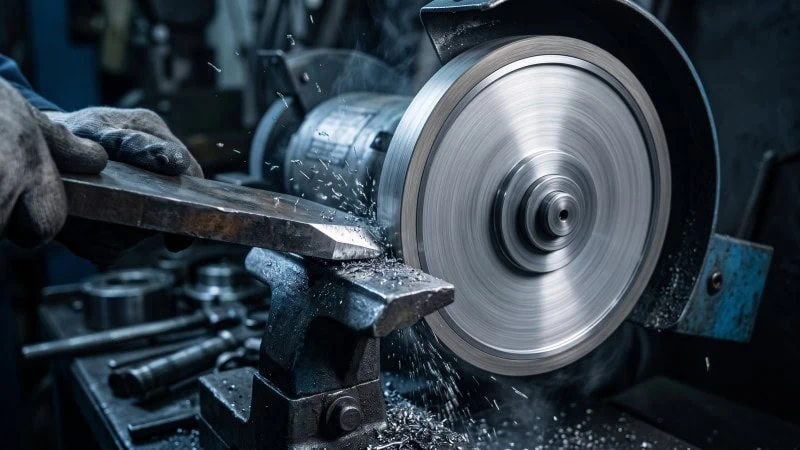
What is the best way to choose the right grit CBN wheel for your specific sharpening needs?
Choosing the right grit CBN wheel requires matching the abrasive size to your desired surface finish. Coarse grits between 60 and 120 are optimal for rapid stock removal and heavy reshaping. Medium grits from 150 to 320 provide the best balance for general-purpose sharpening. Fine grits above 350 are strictly for micro-bevels and achieving tight geometric tolerances.
Best Grit Sizes for Woodturning and Woodworking Tools
When equipping a sharpening station, how do you determine the optimal CBN wheel grit for woodworking chisels and gouges?
The ideal CBN wheel grit for woodworking depends directly on the tool’s current condition and the desired edge sharpness. Use an 80 grit wheel for fast material removal and reshaping damaged gouges. Choose a 180 to 220 grit wheel for routine daily sharpening to maintain a clean edge. Finally, select a 350 to 600 grit wheel for honing micro-bevels and achieving a polished finish.
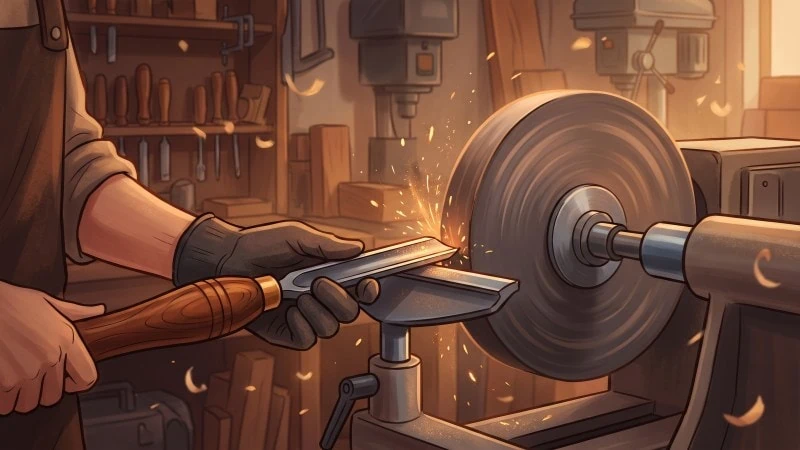
80 Grit for Heavy Reshaping and Edge Repair
When should you use an 80 grit wheel? It is best for heavy-duty metal removal. If a high-speed steel (HSS)1 bowl gouge has a chipped edge, an 80 grit wheel removes the damaged steel quickly. Furthermore, it is perfect for changing the exact bevel angle on a chisel. Because it cuts so aggressively, using an 80 grit wheel works just like using a roughing gouge on a lathe. You clear the waste material fast before making fine finishing cuts.
However, an 80 grit wheel leaves a noticeable scratch pattern on the tool steel. Therefore, you cannot usually carve wood cleanly right after using it. You must follow up with a finer grit to smooth out the cutting edge.
180 to 220 Grit for General Purpose Everyday Sharpening
Can you rely on just one grinding wheel for all your sharpening needs? Yes, if it falls in the 180 to 220 grit range. This specific range is the absolute sweet spot for woodturners. A 180 grit wheel sharpens dull HSS turning tools very quickly. At the same time, it leaves an edge that is sharp enough to turn wood cleanly right off the grinder.
You do not always need secondary honing when using this grit. This versatility makes it the undisputed workhorse of the sharpening station, eliminating the constant need to switch between different grinding wheels during a project.
“For most woodturners, a 180-grit or 220-grit CBN wheel is the only sharpening abrasive they will ever truly need for daily edge maintenance.”
350 to 600 Grit for Micro-Bevels and Final Polishing
Why would you ever need a grit as fine as 600 for woodworking? Fine grits from 350 to 600 are strictly for polishing and honing. They remove very little tool steel. Instead, they refine a pre-shaped edge to a mirror-like finish. Consequently, they are ideal for creating micro-bevels on delicate carving gouges or large skew chisels.
A highly polished edge cuts wood fibers cleaner, leaving a smooth surface that requires far less sanding. Using a 600 grit wheel is exactly like using a cabinet scraper2 to finish a flat hardwood board. It removes tiny imperfections rather than changing the actual shape of the material. Keep in mind that pressing too hard on a fine wheel can clog the abrasive surface, so always use a very light touch.
| Grit Range | Primary Woodworking Application | Expected Edge Finish |
|---|---|---|
| 80 Grit | Reshaping, edge repair, changing bevel angles | Coarse / Scratched |
| 180 – 220 Grit | Routine daily sharpening, standard bowl gouges | Medium / Ready-to-turn |
| 350 – 600 Grit | Micro-bevels, skew chisels, detail carving tools | Fine / Polished |
Best Grit Sizes for Industrial Metal Grinding
In industrial precision machining, how does the required material removal rate3 dictate the choice of CBN grit?
The ideal CBN wheel grit for industrial metal grinding depends heavily on the required material removal rate and target surface finish. Use 60 to 120 grit for rapid stock removal on hardened steel. Select 150 to 320 grit for general machining that balances speed and surface quality. Finally, utilize 400 grit and above for super-finishing operations requiring strict geometric tolerances.

60 to 120 Grit for High Material Removal Rates
When should industrial machinists choose a coarse grit? You select 60 to 120 grit wheels when maximum stock removal is the primary goal. These coarse wheels feature large cubic boron nitride crystals. Consequently, they take deep cuts into hardened steels and aerospace alloys. They remove metal rapidly without generating excessive heat.
Using an 80 grit CBN wheel is conceptually identical to using a roughing end mill on a CNC milling machine. Both tools clear heavy waste quickly before the final finishing pass. For example, in the centerless grinding4 of automotive engine valves, coarse wheels effectively handle the bulk reshaping phase. However, coarse grits leave a rough surface finish with high Ra values5. Because actual material removal rates can vary based on specific resin or vitrified bond6 types, always verify the exact performance specifications with your abrasive supplier before integrating them into a production line.
150 to 320 Grit for Balancing Speed and Surface Finish
Is there a versatile option for everyday industrial machining? The 150 to 320 grit range offers the best compromise. These wheels balance efficient material removal with a respectable surface finish. Therefore, they are standard in many CNC tool and cutter grinding centers.
A 220 grit wheel can easily grind D2 tool steel7 while maintaining excellent thermal control. Machinists frequently use this range for sharpening industrial cutters and drill bits. Think of this intermediate grit range as the abrasive equivalent of a general-purpose carbide end mill. It cuts efficiently and leaves a relatively clean surface in a single operation, serving as the dependable backbone of the production floor.
400 Grit and Above for Tight Tolerances and Precision Finishes
How do you achieve a perfect mirror finish on hardened aerospace components? You must use 400 grit or finer CBN wheels. These micro-grit wheels remove minimal material. Instead, their primary job is hitting strict geometric tolerances and producing exceptionally low surface roughness values.
For instance, manufacturing precision aerospace components8 or high-speed bearings requires exact dimensions. A 600 grit wheel can achieve Ra values below 0.1 micrometers. It leaves the metal surface perfectly smooth and polished. Using a 600 grit wheel is directly comparable to the final spark-out pass on a precision surface grinder. It barely touches the metal, simply removing microscopic peaks to finalize the exact dimension.
| Grit Range | Machining Phase | Material Removal Rate (MRR) | Surface Finish Quality |
|---|---|---|---|
| 60 – 120 Grit | Heavy Roughing | Very High | Rough / High Ra |
| 150 – 320 Grit | Intermediate Grinding | Moderate | Medium Ra |
| 400+ Grit | Precision Finishing | Very Low | Smooth / Low Ra |
Conclusion
Selecting the correct CBN wheel grit ultimately comes down to understanding your specific material and finish requirements. For woodworkers, a medium 180 to 220 grit often serves as the perfect all-around solution. For industrial machinists, the choice must align with strict removal rates and exact tolerance specifications. By matching the grit size to your distinct application, you maximize both the tool’s cutting performance and the abrasive wheel’s lifespan.
References
- High-speed steel (HSS)1 – Wikipedia article detailing the composition and applications of high-speed steel.
- Cabinet scraper2 – Wikipedia guide on card/cabinet scrapers used for fine finishing in woodworking.
- Material removal rate3 – Wikipedia topic page explaining the concept and calculation of material removal rates in machining.
- Centerless grinding4 – ZYDiamondTools ultimate guide on choosing the correct wheels and specifications for centerless grinding operations.
- Ra values5 – Wikipedia technical resource explaining surface roughness parameters like Ra and how they are measured.
- Vitrified bond6 – ZYDiamondTools article covering the specific selection guidelines and performance benefits of vitrified bond grinding wheels.
- D2 tool steel7 – Wikipedia reference page providing specifications, composition, and typical applications of various tool steels, including D2.
- Aerospace components8 – ZYDiamondTools guide on selecting optimal grinding tools to overcome the unique manufacturing challenges in the aerospace industry.