-
Whatsapp: +86 13526572721
-
Email: info@zydiamondtools.com
-
Address: AUX Industrial Park, Zhengzhou City, Henan Province, China
-
Whatsapp: +86 13526572721
-
Email: info@zydiamondtools.com
-
Address: AUX Industrial Park, Zhengzhou City, Henan Province, China

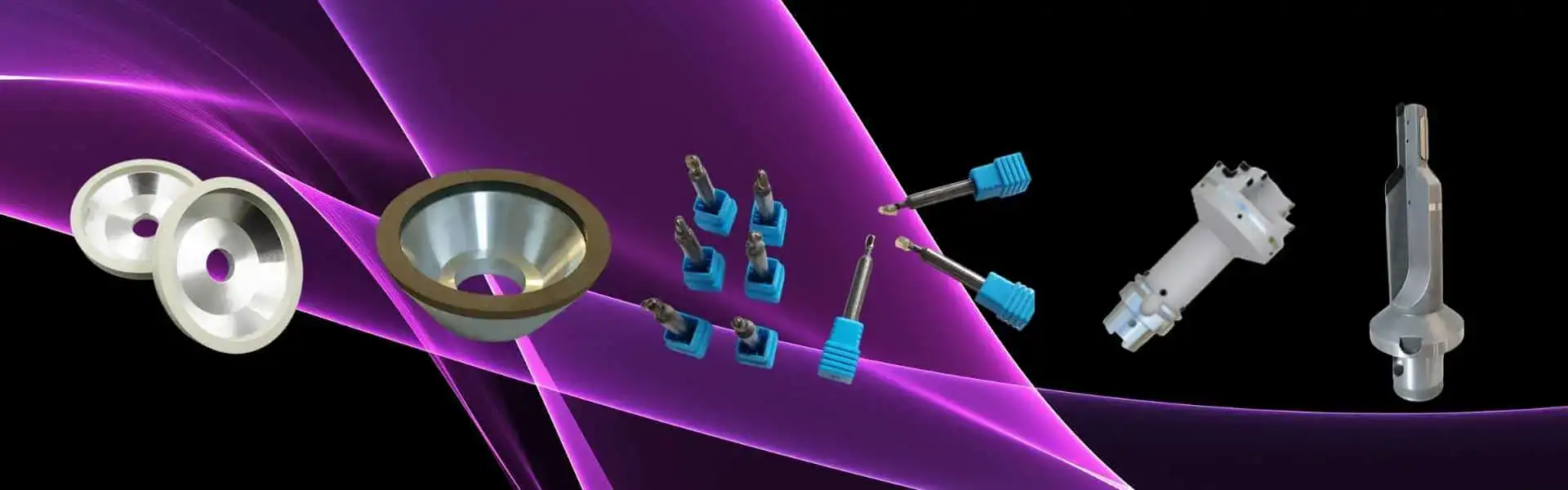
Woodworking and Furniture Manufacturing: The ROI of PCD Diamond Tools for MDF and Particle Board
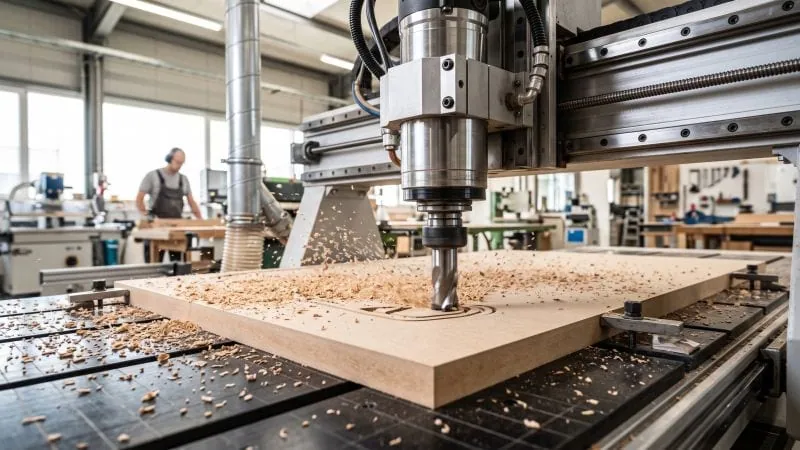
How can furniture manufacturers effectively calculate and maximize the return on investment when upgrading to advanced diamond tooling?
Manufacturers achieve a high ROI on Polycrystalline Diamond (PCD) tooling by evaluating the Total Cost of Ownership (TCO) against traditional carbide. The true financial return is realized through a 50x increase in tool lifespan, the elimination of CNC machine downtime, and drastically reduced material scrap, effectively lowering the cost-per-part in high-volume composite panel processing.
Why Carbide Tools Struggle with High-Wear Composite Boards
Why exactly do standard carbide router bits and saw blades dull so rapidly when milling engineered wood panels?
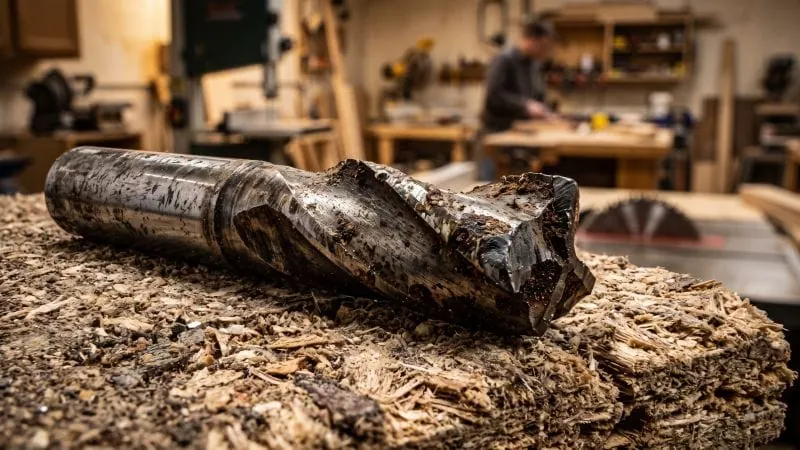
Traditional tungsten carbide tools fail quickly because engineered woods like MDF and particle board contain high volumes of synthetic resins, adhesives, and microscopic impurities. Therefore, these composite materials create extreme abrasive friction during cutting, which rapidly erodes the carbide cutting edge and destroys the tool’s geometry.
The Abrasive Nature of MDF and Particle Board Resins
Solid wood is generally predictable to cut. However, engineered materials present a completely different machining environment. Medium-Density Fiberboard1 (MDF) and particle board are manufactured using intense heat, high pressure, and synthetic binders. As a result, the final product is incredibly abrasive.
Think of this process like running a standard steel jointer knife directly over a moving belt sander. The grit on the sander strips the metal away in seconds. Similarly, the cured resins embedded inside particle board act like millions of tiny abrasive rocks against the cutting tool.
Furthermore, these boards often contain hidden impurities. During the manufacturing process, dirt, sand, and silica can mix with the wood fibers. Consequently, when a carbide edge strikes these hard minerals at 18,000 RPM, the metal suffers micro-chipping.
The table below breaks down what a carbide tool actually encounters when cutting engineered panels:
| Material Component | Impact on Carbide Tooling |
|---|---|
| Wood Fibers and Chips | Low impact; easily sheared by a sharp edge. |
| Urea-Formaldehyde Resin | High impact; generates extreme friction and heat. |
| Silica and Sand Impurities | Severe impact; causes micro-chipping on the carbide tip. |
| Melamine Surface Laminates | Very high impact; rapidly blunts the initial entry point. |
In addition, as the carbide edge dulls, the friction increases. This extra friction creates excess heat. Heat is the ultimate enemy of carbide, causing the cutting edge to break down even faster.
Financial Drain of Constant Tool Replacement and Machine Downtime
The rapid wear of carbide tools creates a heavy financial burden for high-volume furniture factories. The most obvious expense is the constant purchasing of replacement bits. However, the hidden costs are often much worse.
For instance, a standard solid carbide router bit might only last through 15 to 20 sheets of double-sided melamine before the cut quality becomes unacceptable. Because exact tool life parameters will vary based on specific feed rates, spindle speeds, and board densities, you should always verify expected wear rates directly with your material and tooling suppliers.
When a tool dulls quickly, it triggers a chain reaction of expensive delays on the factory floor:
- CNC Machine Downtime: Halting a production cycle to swap out a dull bit costs valuable minutes. If this happens multiple times a day, you lose hours of profitable machine time each week.
- Operator Labor: Paying skilled machinists to constantly pause production, manage tool changes, and update tool offsets wastes valuable labor hours.
- Wasted Machine Capacity: A factory can only produce as much furniture as its CNC routers can cut. Frequent stoppages artificially lower your maximum factory output.
“In high-volume panel processing, the true cost of a dull tool is rarely just the price of the metal; it is the steep price of an idle spindle.”
Ultimately, trying to push a dull carbide tool just a little further leads to disaster. The compromised cutting edge will begin tearing the board’s surface instead of cleanly slicing it. Consequently, this leads to rejected parts, which introduces a whole new category of material waste and financial loss.
Breaking Down the Total Cost of Ownership for Diamond Tooling
How exactly can woodworking facilities justify the steep initial price tag of diamond tooling?
The total cost of ownership for Polycrystalline Diamond (PCD) tooling is significantly lower than standard carbide over long production runs. Woodworking manufacturers achieve a high return on investment by factoring in the massive 50x increase in tool lifespan, the drastic reduction in CNC machine downtime, and the elimination of expensive material scrap.
Comparing Initial Investment Against 50x Lifespan Gains
Let’s look at the upfront math. Initially, a PCD router bit2 costs significantly more than a standard solid carbide bit. However, the purchase price is only a tiny fraction of the story. In reality, PCD diamond edges easily outlast carbide tools by a factor of 50 to 1 when milling engineered wood.
Think of this like upgrading your workshop’s dust collection system. A cheap portable shop vacuum is affordable upfront. Yet, you must constantly stop production to empty it and buy expensive replacement filters. In contrast, a large central cyclone dust collector costs much more initially. However, it runs continuously for months without maintenance. PCD tooling follows this exact same logic.
To see the real financial value, you must calculate the true cost per sheet. The table below illustrates a typical production scenario cutting melamine-faced particle board:
| Tooling Material | Average Upfront Cost | Estimated Lifespan (Sheets) | Cost Per Sheet |
|---|---|---|---|
| Solid Carbide | $45.00 | 25 | $1.80 |
| PCD Diamond | $350.00 | 1,250 | $0.28 |
Clearly, the diamond tool delivers massive savings over its lifespan, transforming what looks like an expensive purchase into a highly cost-effective long-term investment.
Calculating Labor Savings from Reduced CNC Tool Changeovers
Are you paying your CNC operators to cut parts, or are you paying them to manage tools?
While high-production CNC nesting routers utilize Automatic Tool Changers (ATC), swapping a dull tool still disrupts the workflow. The machine must halt its cutting cycle to index a fresh tool holder from the magazine. More importantly, the hidden labor cost occurs offline.
When a carbide bit wears out multiple times a shift, operators must manually break down the HSK or ISO tool holder, clean the collet, insert the new carbide bit, and measure it precisely on a tool presetter before updating the CNC height offsets. This continuous offline maintenance consumes significant man-hours.
PCD diamond tools eliminate this constant cycle. Because a diamond bit stays sharp for weeks or even months, your tool magazines remain loaded with optimal tools, and your spindle keeps turning. Therefore, you instantly reclaim lost labor hours. You transform offline maintenance time directly into profitable cutting time.
Evaluating Scrap Reduction and Eliminated Rework Costs
Dull tools do not just cut slowly; they actively destroy expensive materials. When a carbide tool loses its edge, it begins to tear the brittle melamine surface. As a result, the panel exits the machine with heavily chipped edges.
What happens next? Those chipped parts cannot move directly to the edgebander. Instead, they must be completely scrapped and re-cut. Alternatively, they require costly manual rework. A worker might have to manually sand the edge or apply excess filler to hide the defect. This wastes material, glue, and highly valuable labor.
PCD diamond tools maintain a razor-sharp edge for thousands of cuts. Thus, they prevent this costly material waste entirely. Every part that comes off the CNC router is immediately ready for the edgebanding process. By completely eliminating scrap and rework, the diamond tool essentially pays for itself within the very first weeks of production.

Operational Advantages Beyond the Balance Sheet
How do PCD diamond tools improve daily factory operations beyond just saving money on replacements?
Polycrystalline Diamond (PCD) tooling delivers critical operational advantages by sustaining flawless edge quality across thousands of cuts and enabling significantly faster CNC feed rates. This allows furniture factories to increase overall throughput and seamlessly integrate parts into automated edgebanding processes without manual intervention.
Sustaining Flawless Edge Quality Without Chipping
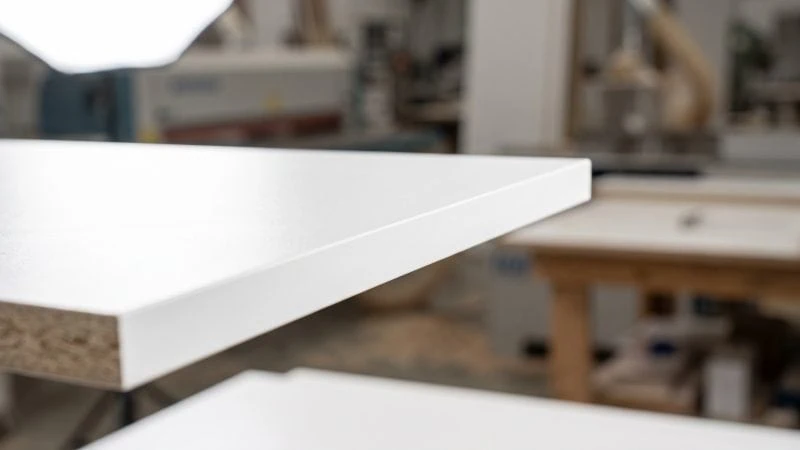
When manufacturing modern cabinet boxes, cut quality is everything. The melamine layers on MDF and particle board are incredibly brittle. Standard carbide tools lose their microscopic sharp edge rapidly. Consequently, they begin to tear rather than slice the laminate.
Think of a standard circular saw blade cutting through thin plywood veneer. If you push the wood too fast, the veneer splinters wildly. You get the exact same tearing effect on a CNC router when a dull carbide bit tries to chew through melamine.
PCD diamond tools prevent this. Diamond is exceptionally hard, meaning the cutting edge stays perfectly intact. Therefore, it continuously delivers a clean, mirror-like finish on the board’s edge.
Why is this edge quality so vital?
- Zero Pre-Milling Required: A clean cut means the part can go straight to the edgebander.
- Invisible Glue Lines: Perfect edges allow the edgebander to apply a micro-thin layer of hot melt glue.
- Moisture Resistance: A flawless edge seals tighter against moisture, which is crucial for kitchen and bathroom cabinetry.
Because the diamond edge does not degrade quickly, the cut quality remains perfectly consistent from the first sheet to the thousandth sheet.
Maximizing Feed Rates to Boost Factory Throughput
Time is money on the factory floor. The speed at which your CNC machine cuts directly determines your daily output. Unfortunately, carbide tools often create a bottleneck.
If you push a carbide router bit too fast through dense MDF, it generates intense heat and friction. Consequently, the bit will scorch the wood, dull instantly, or even snap in half. Therefore, operators are forced to slow down the machine’s feed rate to protect the fragile carbide.
PCD diamond tools, however, thrive at high speeds. Because diamond dissipates heat highly effectively, it can handle incredibly aggressive feed rates.
| Tooling Type | Typical Max Feed Rate (Meters/Minute) | Limiting Factor |
|---|---|---|
| Solid Carbide | 8 to 15 m/min | Heat buildup and rapid dulling. |
| PCD Diamond | 20 to 35+ m/min | Spindle horsepower and vacuum hold-down. |
By upgrading to diamond, a factory might increase its CNC cutting speed by 50% or more. The spindle moves much faster across the gantry. As a result, you finish a nest of cabinet parts much quicker. This allows the factory to process more sheets per shift, dramatically boosting total throughput without buying a second CNC machine.
Identifying Scenarios Where Alternative Tooling Makes More Sense
Are there specific manufacturing situations where expensive diamond tooling is actually the wrong choice?
Yes, Polycrystalline Diamond (PCD) tooling is not universally ideal and can be a poor investment for cutting natural solid woods, processing high-impact materials with hidden metals, or running short, custom prototype batches. In these specific scenarios, standard solid carbide or insert tooling provides better impact resistance and a much safer financial return.
Processing Solid Wood and High-Impact Applications
While PCD diamond excels at grinding through abrasive glues in MDF, it fails when dealing with sudden physical impacts. Diamond is incredibly hard, but it is also exceptionally brittle.
Think of the difference between a highly hardened machinist’s file and a standard steel mallet. The file is exceptionally hard and can easily grind away other metals without wearing down (high hardness). However, if you strike a hard surface with it, the brittle file will snap in half. The mallet, while much softer, has the impact toughness needed to absorb the shock without breaking. The exact same principle applies to router bits.
When you cut natural solid wood, like oak or maple, the material is not uniform. The cutter constantly hits dense knots, shifting grain patterns, and varying moisture levels. These natural inconsistencies create sudden shockwaves. When a brittle PCD edge strikes a hard oak knot at high speeds, the diamond will simply crack and shatter.
Furthermore, some factories process recycled materials or pallets that might contain hidden staples, screws, or nails.
| Material Hazard | Effect on Carbide Tooling | Effect on PCD Diamond Tooling |
|---|---|---|
| Solid Wood Knots | Absorbs moderate shock; may micro-chip but survives. | Diamond tip shatters from impact. |
| Hidden Staples/Nails | Edge chips severely; bit often snaps. | Total tool destruction; unrepairable. |
| Uneven Grain Density | Cuts smoothly through varying resistance. | Micro-vibrations can cause edge cracking. |
While solid carbide is still a rigid and inherently brittle material, its micro-grain structure offers comparatively higher impact toughness than PCD. Instead of shattering completely upon striking a natural knot, a carbide edge is more likely to sustain minor micro-chipping and continue cutting. Therefore, if your shop cuts solid timber doors, hardwood face frames, or reclaimed lumber, carbide remains the absolute safest and most effective choice.
Short Runs and Custom Prototyping Constraints
Financial ROI always depends on volume. The massive cost savings of diamond tooling only appear after you run thousands of sheets.
If you are a custom architectural millwork shop, your workflow is entirely different from a high-production cabinet factory. You might cut three sheets of MDF for a custom reception desk, then switch to a specialty acrylic, and then cut aluminum composite panels.
In this low-volume, highly variable environment, you will never cut enough continuous MDF to justify spending $350 on a single router bit.
- Prototyping: When testing new furniture designs, you frequently adjust tool paths and depths. Accidental plunges into the CNC spoilboard or aluminum clamping pods can easily destroy a bit. Ruining a $45 carbide bit is a minor annoyance; ruining a $350 diamond tool destroys your profit margin for the day.
- Insert Tooling Alternatives: For smaller shops cutting composite boards, carbide insert tooling often makes more sense. You buy the heavy steel tool body once, and then simply swap out inexpensive, razor-sharp carbide knives when they dull.
Ultimately, diamond tooling is a specialized marathon runner. If your daily production requires a series of short, unpredictable sprints, stick with versatile carbide.
Best Practices for Tool Maintenance and Lifecycle Management
How can factory managers guarantee they actually extract the maximum financial value from their expensive diamond tooling investments?
To maximize the ROI of PCD diamond tooling, factories must implement a proactive, data-driven lifecycle management system. This requires establishing a strict resharpening schedule to prevent catastrophic tool failure and implementing a precise tracking system to calculate the exact cost-per-part yield.
Establishing a Resharpening Schedule
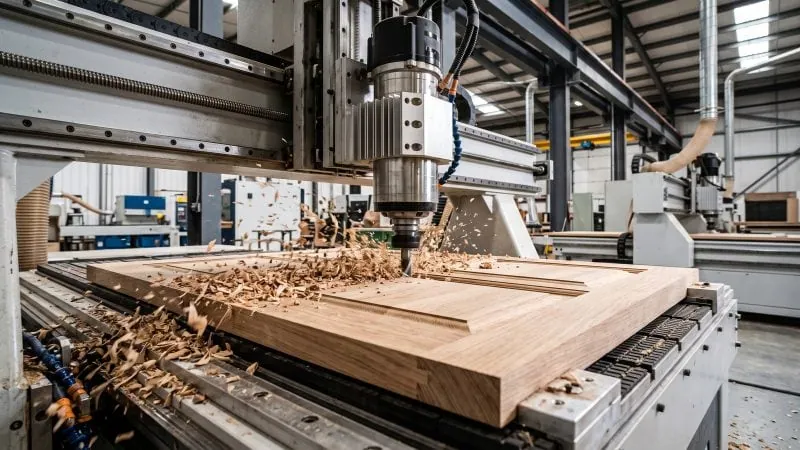
Unlike standard solid carbide bits, which are usually thrown away when dull, PCD diamond tools are designed to be resharpened multiple times. A thick layer of polycrystalline diamond is brazed onto the tool body. A specialized tooling service can use wire EDM (Electrical Discharge Machining)3 to grind a fresh cutting edge.
However, timing is everything. You cannot wait until the tool starts ruining the melamine board to send it out for service.
Think of this like replacing the abrasive belts on a wide-belt sander. If you wait until the belt snaps or burns the wood, you have already ruined the workpiece and wasted valuable production time. Instead, you swap the belt based on a set number of run hours. You must treat diamond tooling exactly the same way.
When a diamond edge becomes too blunt, the friction increases exponentially. This extreme heat can eventually degrade the braze joint holding the diamond tip to the steel body. If a brazed joint fails at 18,000 RPM, the diamond tip becomes a high-velocity projectile, creating a severe safety hazard for operators and instantly destroying the tool.
To prevent this, factories must establish a proactive schedule:
| Tooling Lifecycle Stage | Action Required | Resulting Benefit |
|---|---|---|
| New Tool Installation | Record baseline edge quality and CNC spindle load meters. | Establishes perfect operating parameters. |
| Mid-Life Observation | Monitor for a 10-15% increase in spindle amp draw. | Early warning that friction is increasing. |
| Scheduled Removal | Remove tool before cut quality visibly degrades. | Ensures enough diamond remains for safe resharpening. |
| Resharpening Cycle | Send to supplier; update CNC diameter offsets upon return. | Extends total tool life by 3x to 5x. |
Implementing Tracking Systems for Cost-Per-Part Analysis
If you do not track your tools, you cannot prove your ROI. Many shop managers purchase expensive diamond bits but fail to monitor their actual mileage on the factory floor.
To truly understand the value, you must track the exact “cost-per-part4” or “cost-per-sheet.” Relying on a machine operator’s memory is a guaranteed way to lose money.
Instead, implement a simple, rigorous tracking system:
- Laser Etching: Ensure every diamond tool has a unique serial number laser-etched onto the shank.
- Machine Logs: Have the CNC operator log the exact date the tool was installed and the exact date it was removed.
- Software Integration: Utilize your CNC nesting software or ERP system to track the exact linear meters cut by that specific tool during that time frame.
Once you have the hard data, the math is simple. If a $350 router bit successfully cuts 40,000 linear meters of particle board before needing a $50 resharpening, your true tooling cost is less than a penny per meter. By diligently tracking this data, you transform tooling from a frustrating overhead expense into a highly predictable, highly profitable manufacturing asset.
Conclusion
Transitioning to PCD diamond tools requires a shift in mindset from focusing on the initial purchase price to understanding the long-term total cost of ownership. While the upfront investment is undeniably higher than traditional solid carbide, the massive returns generated through 50x lifespan increases, reclaimed machine capacity, and flawless edge quality make it a financially sound decision for high-volume manufacturing. By implementing strict maintenance schedules and tracking systems, woodworking facilities can transform their CNC operations, turning tooling into a strategic asset rather than a constant overhead burden.
References
- Medium-Density Fiberboard1 – Wikipedia article explaining the composition and manufacturing process of MDF.
- PCD router bit2 – ZYDiamondTools product page featuring high-performance PCD router bits for woodworking and composite machining.
- EDM (Electrical Discharge Machining)3 – Wikipedia page detailing the EDM process used in precision manufacturing and tool resharpening.
- cost-per-part4 – ZYDiamondTools guide explaining Total Cost of Ownership (TCO) in the context of superhard tooling and abrasives.