-
Whatsapp: +86 13526572721
-
Email: info@zydiamondtools.com
-
Address: AUX Industrial Park, Zhengzhou City, Henan Province, China
-
Whatsapp: +86 13526572721
-
Email: info@zydiamondtools.com
-
Address: AUX Industrial Park, Zhengzhou City, Henan Province, China

Optimizing Co-Cr-Mo Artificial Joint Manufacturing Using PCBN Tooling
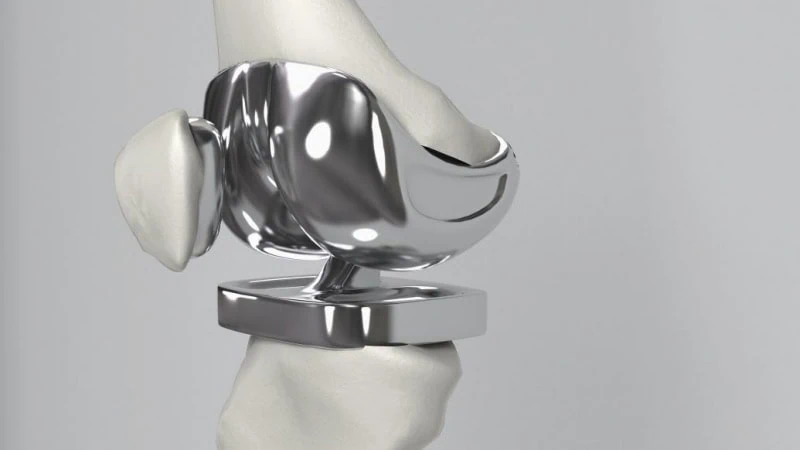
How can manufacturers overcome the extreme machining challenges of Cobalt-Chromium-Molybdenum (Co-Cr-Mo) when producing medical-grade artificial joints?
Manufacturers optimize Co-Cr-Mo artificial joint production by implementing Polycrystalline Cubic Boron Nitride (PCBN)1 tooling. PCBN inserts withstand extreme cutting temperatures, resist severe abrasiveness, and effortlessly penetrate work-hardened layers, thereby extending tool life and achieving the precise dimensional tolerances and mirror-like surface finishes required for orthopedic implants.
Primary Bottlenecks in Cutting Cobalt-Chromium-Molybdenum
Manufacturing medical implants from Cobalt-Chromium-Molybdenum (Co-Cr-Mo) presents some of the most difficult challenges in the machining industry.
Machining Co-Cr-Mo alloys is incredibly difficult due to three main factors: severe abrasiveness, poor thermal conductivity, and rapid work hardening2. These physical traits trap high heat at the cutting zone and physically degrade the cutting edge. Consequently, standard cutting tools fail prematurely, which severely limits the production efficiency of artificial joints.
Extreme Abrasiveness and Rapid Insert Wear
The internal structure of Co-Cr-Mo alloys contains hard carbide particles distributed evenly throughout a softer metal matrix. These microscopic hard spots act like an aggressive abrasive against the cutting tool.
If your cutting edge is failing faster than expected, this extreme abrasiveness is usually the culprit. We can compare this issue to turning a cast iron cylinder that contains hard sand inclusions. As the cutting insert hits these dense carbide spots, it suffers from severe micro-chipping.
“In orthopedic implant manufacturing, managing tool wear3 is not just about tool cost; it is about maintaining the critical dimensional accuracy of the joint.”
This constant abrasion leads to rapid flank wear on traditional cutting inserts. Frequently, a standard tool edge degrades completely before a single artificial hip joint is fully machined. Consequently, operators must constantly stop the CNC machine to swap out worn inserts.
Poor Thermal Conductivity and Heat Accumulation
During any precision machining operation, friction naturally generates massive amounts of heat. Ideally, the sheared metal chip absorbs this heat and carries it away from the tool face.
However, Co-Cr-Mo does not behave this way. Unlike aluminum or brass, which dissipate heat quickly, Co-Cr-Mo has a notoriously low thermal conductivity4 rating. It typically measures around 13 to 14 W/m·K. While its heat dissipation is slightly better than titanium alloys, it still traps immense heat at the cutting edge.
| Material Type | Average Thermal Conductivity (W/m·K) | Heat Dissipation Capability |
|---|---|---|
| Aluminum Alloy (6061) | 167 | Excellent |
| Carbon Steel (1045) | 49 | Good |
| Co-Cr-Mo Alloy | 13 – 14 | Poor |
| Titanium Alloy (Ti-6Al-4V)5 | 6.7 | Very Poor |
Because the chip cannot absorb the heat, up to 80% of the cutting temperature transfers directly into the tool edge. This extreme heat accumulation causes plastic deformation of the tool tip. Ultimately, the cutting edge softens and loses its sharp profile, ruining the surface finish of the medical implant.
Severe Work Hardening Effects on Tool Edges
Work hardening presents the final major obstacle in this process. When a cutting tool shears the Co-Cr-Mo alloy, the mechanical stress physically alters the metal’s surface structure. As a result, the newly cut surface instantly becomes much harder than the uncut metal below it.
This reaction is very similar to a standard shot peening operation in a machine shop. In shot peening, constant mechanical impacts compress and harden a metal part’s exterior. Co-Cr-Mo does this automatically during the cutting phase.
Because the surface hardens instantly, the next pass of the cutting tool must break through a significantly tougher crust. If your depth of cut is too shallow, the tool edge will simply rub against this hardened layer instead of cutting it. This rubbing friction generates even more trapped heat, creating a deadly cycle of rapid tool wear and poor surface integrity.

Advantages of Polycrystalline Cubic Boron Nitride Inserts
To effectively process these tough medical alloys, modern machine shops are abandoning traditional carbide in favor of advanced superabrasives.
Polycrystalline Cubic Boron Nitride (PCBN) inserts provide superior hot hardness, excellent chemical stability, and extreme wear resistance. Consequently, these tools allow manufacturers to maintain continuous cutting action on difficult metals. Furthermore, they achieve the mirror-like surface finishes required for medical implants, which ultimately lowers the overall cost per component.
Exceptional Hot Hardness for Continuous Cutting
Hot hardness is a material’s ability to stay rigid at extremely high temperatures. As discussed earlier, cutting Co-Cr-Mo generates massive heat, causing traditional carbide inserts to soften quickly.
However, PCBN tools excel in this harsh environment. PCBN is the second hardest material on earth, directly behind diamond. Therefore, it easily withstands the intense heat trapped in the cutting zone.
We can compare this to a common workshop scenario. If you run a high-speed steel (HSS) drill too fast, the tip turns blue and fails. In contrast, a solid carbide drill survives that exact same heat. Similarly, PCBN survives cutting temperatures that would instantly melt a standard carbide insert. Specifically, PCBN maintains its structural integrity at temperatures exceeding 1000°C.
| Tool Material | Hardness at Room Temp (HV) | Hardness at 1000°C (HV) | Suitability for Co-Cr-Mo |
|---|---|---|---|
| Cemented Carbide | 1500 – 1800 | < 500 | Poor |
| Alumina Ceramic | 1800 – 2200 | 800 – 1000 | Moderate |
| PCBN | 3000 – 4500 | > 1500 | Excellent |
Because PCBN stays hard, the cutting edge does not deform. Consequently, CNC lathes can run continuously without stopping for premature tool changes.
Meeting Medical-Grade Surface Integrity Standards
Artificial joints require absolutely perfect exterior surfaces. Any microscopic flaw can cause severe friction inside the human body. Moreover, rough surfaces can encourage dangerous bacterial growth after surgery.
“In orthopedic implant manufacturing, perfect surface integrity directly dictates the safety and lifespan of the artificial joint.”
PCBN inserts cleanly shear the Co-Cr-Mo alloy. They do not tear or smear the dense metal. Therefore, the cutting action leaves a highly polished, consistent surface behind.
- Reduces Micro-Burrs: The stable cutting edge prevents jagged microscopic burrs from forming along the part.
- Controls Residual Stress: Clean cutting reduces harmful mechanical tension left on the metal’s surface.
- Improves Surface Finish (Ra)6: Operators frequently achieve mirror-like finishes directly off the CNC lathe.
Often, a PCBN tool can hit an average roughness (Ra) of 0.2 to 0.4 micrometers during finish turning. This exceptional finish drastically reduces the need for secondary hand polishing, saving significant production time.
Significant Reduction in Cost-Per-Component
A single PCBN insert costs much more than a standard carbide insert upfront. However, smart manufacturers look at the total cost per component7, rather than just the initial tool price.
We can compare this to buying a high-capacity CNC coolant filtration unit. The upfront price tag is steep, but the extended coolant life and reduced machine wear quickly pay for the investment. Purchasing PCBN tooling follows this exact same financial logic.
PCBN tools dramatically reduce manufacturing expenses in three specific ways:
- Fewer Tool Replacements: One PCBN edge reliably outlasts dozens of standard carbide edges.
- Less Machine Downtime: Operators spend significantly less time stopping the machine to index worn inserts.
- Lower Scrap Rates: Consistent cutting edges prevent sudden dimensional failures that ruin expensive raw materials.
By keeping the spindle turning and reducing scrapped parts, the overall production cost drops rapidly. The high initial price of PCBN is quickly absorbed by the massive increase in daily factory output.
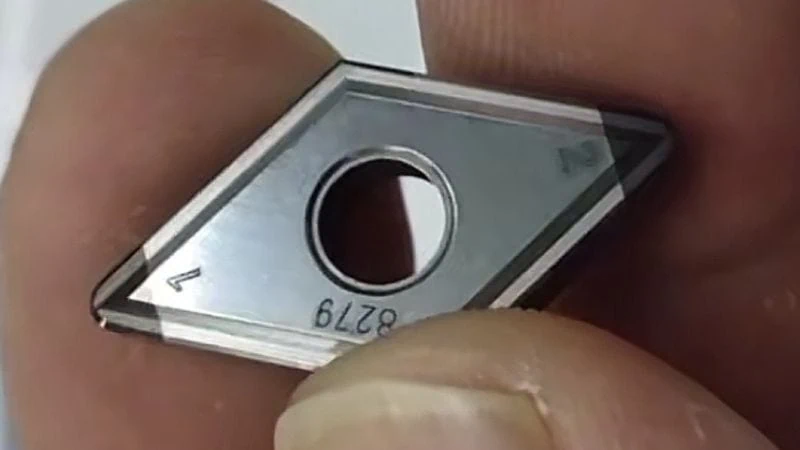
Recommended Machining Parameters for Implants
Transitioning to PCBN tooling requires operators to abandon standard carbide baseline settings and adopt specialized cutting strategies.
To machine medical-grade Co-Cr-Mo effectively, operators must utilize highly specific cutting parameters. Typically, cutting speeds range from 45 to 80 meters per minute, while feed rates must remain incredibly consistent. Furthermore, operators must maintain a precise depth of cut supported by proper cooling methods to prevent thermal shock.
Selecting Optimal Cutting Speeds and Feed Rates
Machining Co-Cr-Mo requires a very delicate balance. Running the spindle too slowly causes the tool to rub against the metal. This rubbing generates excessive heat and ruins the part. Conversely, running the spindle too fast shatters the PCBN insert immediately.
Therefore, PCBN tools require a specific “sweet spot” to function properly. We can compare this delicate balance to climb milling on a 5-axis CNC router. If the feed per tooth drops too low, the solid carbide end mill simply burns the material instead of shearing it cleanly.
Typically, the ideal cutting speed (Vc) for Co-Cr-Mo falls between 45 and 80 meters per minute. Additionally, the feed rate (fn) should remain incredibly light. Usually, an optimal feed rate ranges from 0.05 to 0.15 millimeters per revolution.
| Parameter Type | Recommended Range | Primary Effect on Process |
|---|---|---|
| Cutting Speed (Vc) | 45 – 80 m/min | Controls heat generation and tool life. |
| Feed Rate (fn) | 0.05 – 0.15 mm/rev | Dictates the final surface roughness (Ra). |
Depth of Cut Adjustments for Precision Finishing
Cutting Co-Cr-Mo instantly hardens the metal’s surface. Therefore, your cutting tool must always dig underneath this newly hardened crust, even during finishing operations.
If your depth of cut is too shallow, the PCBN edge will simply drag across the hardened layer. We can compare this to turning a case-hardened shaft on a lathe. If you try to take a microscopic skim cut, the tool just bounces off the hard outer shell. You must take a deliberate, slightly deeper pass to cut cleanly through into the softer base material beneath.
For artificial joints, finishing passes usually require a depth of cut between 0.10 and 0.30 millimeters. This specific depth ensures the tool edge shears the metal properly, protecting the fragile cutting edge from unnecessary abrasion.
“Maintaining a rigid, continuous depth of cut is the absolute key to surviving the aggressive work-hardened layer of cobalt-chrome alloys.”
Managing Thermal Shock: Dry Cutting vs. Minimum Quantity Lubrication
While PCBN tools are incredibly hard, they are highly susceptible to thermal shock. When machining Co-Cr-Mo, the cutting edge reaches extreme temperatures. If high-pressure flood coolant is applied unevenly, the sudden temperature drops cause microscopic cracks to form in the PCBN insert, leading to catastrophic tool failure.
Therefore, operators must carefully manage how they cool the cutting zone. Currently, manufacturers achieve the best results using dry machining combined with compressed air blasts, or Minimum Quantity Lubrication (MQL)8.
Dry machining with continuous air blast efficiently clears abrasive chips without risking thermal cracking. Conversely, MQL sprays a highly targeted, microscopic mist of oil directly at the cutting zone, providing excellent lubricity for precision finishing without causing rapid temperature fluctuations.
| Cooling Method | Primary Advantage | Application in PCBN Machining |
|---|---|---|
| Dry Machining + Air Blast | Eliminates thermal shock risk, clears chips effectively. | Ideal for continuous roughing and semi-finishing. |
| MQL (Minimum Quantity Lubrication) | Excellent lubricity, minimal temperature fluctuation. | Ideal for high-precision finish turning. |
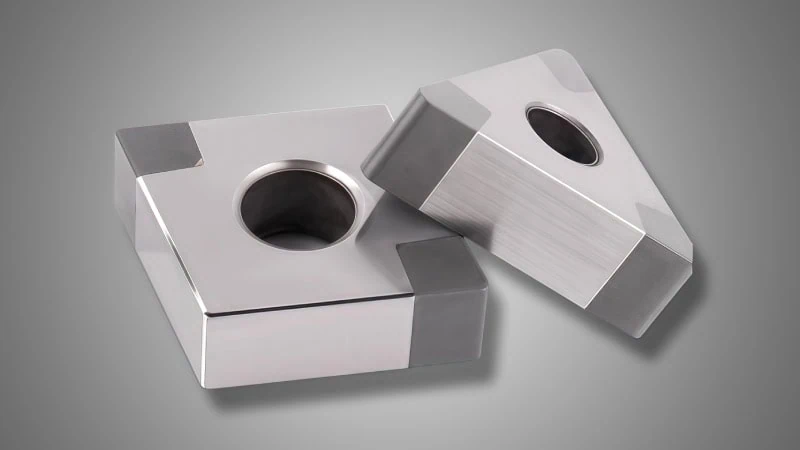
Production Case Studies and Performance Metrics
Theoretical advantages must translate into measurable shop-floor results to justify the tooling investment.
In actual production environments, PCBN tooling drastically outperforms traditional methods by delivering superior dimensional accuracy and massive tool life extensions. Case studies show that PCBN inserts can increase tool life by up to tenfold during hip joint turning, while simultaneously maintaining strict geometric tolerances during complex taper connections.
Hard Turning Operations for Hip Joint Heads
The femoral head of an artificial hip joint must be perfectly spherical. Consequently, any slight deviation in its roundness will cause excessive wear against the artificial socket after implantation. Hard turning this dense Co-Cr-Mo sphere is notoriously difficult. We can compare this precision requirement to machining a high-pressure ball valve for a hydraulic pump. If the ball is slightly oval, the entire system leaks and fails.
Recently, a leading medical tool manufacturer conducted a specific case study on this process. They replaced standard coated carbide inserts with customized PCBN inserts for the final turning phase. The PCBN tools successfully finished the spherical heads in a single, continuous cutting pass.
Furthermore, the surface roughness drastically improved. Operators consistently achieved a surface finish (Ra) of 0.2 micrometers. Simultaneously, the out-of-roundness error stayed strictly below 3 microns.
“Achieving a single-pass finish on a Co-Cr-Mo sphere eliminates the need for secondary grinding, instantly boosting daily factory output.”
Precision Turning of Femoral Stem Tapers
Beyond the spherical head, the femoral stem taper—the critical connection point between the implant parts—requires absolute precision. Turning this intricate taper out of solid Co-Cr-Mo demands extreme dimensional stability. The cutting tool must hold its exact profile throughout the entire pass to ensure the correct taper angle.
If a traditional carbide tool wears down mid-cut, the angle of the taper becomes distorted. We see this same challenge when machining precision Morse tapers for machine tool spindles; even a deviation of a few microns prevents a secure, locking fit.
During a controlled production run, engineers measured the dimensional deviation of Co-Cr-Mo tapers after continuous finish turning. PCBN tools held their shape significantly better than traditional carbide options.
| Part Number Machined | Carbide Tool Deviation (mm) | PCBN Tool Deviation (mm) | Tolerance Status |
|---|---|---|---|
| Part 1 | 0.010 | 0.002 | Acceptable |
| Part 3 | 0.025 | 0.003 | Acceptable |
| Part 5 | 0.045 | 0.004 | Carbide Rejected |
| Part 10 | Failed | 0.006 | PCBN Acceptable |
As the table demonstrates, the PCBN tool maintained critical tolerances long after the carbide tool failed and produced scrap parts.
Tool Life Comparison Against Traditional Carbide Grades
Ultimately, the most important metric for any machine shop is tool life. Upgrading to PCBN is very similar to replacing standard aluminum oxide grinding wheels with superabrasive CBN wheels in a centerless grinder. The initial cost is higher, but the continuous, uninterrupted production quickly pays for the upgrade.
In a direct factory comparison, operators tracked the total number of artificial joint components produced per cutting edge. They ran the exact same Co-Cr-Mo material on the exact same CNC lathe.
| Tool Material | Average Parts Per Edge | Machine Stoppages per 100 Parts |
|---|---|---|
| Uncoated Carbide | 2 to 3 | ~40 |
| PVD Coated Carbide | 5 to 7 | ~16 |
| Solid PCBN9 | 50 to 65 | ~2 |
The data reveals a massive improvement. PCBN inserts produced nearly ten times more parts per edge than the best coated carbide options. Consequently, operators spent less time opening the machine doors and indexing tools.
By virtually eliminating machine downtime, factories can easily maximize their daily yield of Co-Cr-Mo artificial joints.
Conclusion
Manufacturing Cobalt-Chromium-Molybdenum orthopedic implants demands uncompromising precision and highly resilient machining strategies. As demonstrated, transitioning from conventional carbide to advanced PCBN tooling fundamentally resolves the bottlenecks of rapid tool wear, poor thermal conductivity, and severe work hardening. By optimizing cutting speeds, feeds, and cooling methods, manufacturers can achieve medical-grade surface integrity while drastically lowering the long-term cost per component. If you are ready to implement these proven tooling strategies into your own medical manufacturing workflow, please contact us for expert technical support and customized solutions.
References
- Polycrystalline Cubic Boron Nitride (PCBN)1 – ZYDiamondTools comprehensive guide covering the properties, advantages, and machining applications of CBN and PCBN cutting tools.
- work hardening2 – Wikipedia article explaining the physical phenomenon of strain hardening in metallurgy and its impact on material machinability.
- tool wear3 – ZYDiamondTools blog post analyzing common causes of premature tool wear during machining operations and proven solutions to extend tool life.
- thermal conductivity4 – ScienceDirect resource explaining the scientific principles of heat transfer and thermal conductivity in various materials.
- Titanium Alloy (Ti-6Al-4V)5 – AZoM material profile outlining the composition, physical properties, and typical engineering uses of Ti-6Al-4V titanium alloy.
- Surface Finish (Ra)6 – Wikipedia technical guide on surface roughness, covering Ra measurement standards and surface integrity in manufacturing.
- total cost per component7 – ZYDiamondTools article explaining how to calculate Total Cost of Ownership (TCO) to justify superhard tooling investments over standard carbide.
- Minimum Quantity Lubrication (MQL)8 – ScienceDirect topic page covering the principles, setups, and environmental benefits of MQL in precision machining.
- Solid PCBN9 – ZYDiamondTools product page featuring solid CBN inserts designed for heavy-duty hard machining applications.