-
Whatsapp: +86 13526572721
-
Email: info@zydiamondtools.com
-
Address: AUX Industrial Park, Zhengzhou City, Henan Province, China
-
Whatsapp: +86 13526572721
-
Email: info@zydiamondtools.com
-
Address: AUX Industrial Park, Zhengzhou City, Henan Province, China

How to Choose the Right Diamond Grinding Wheels for Glass Processing
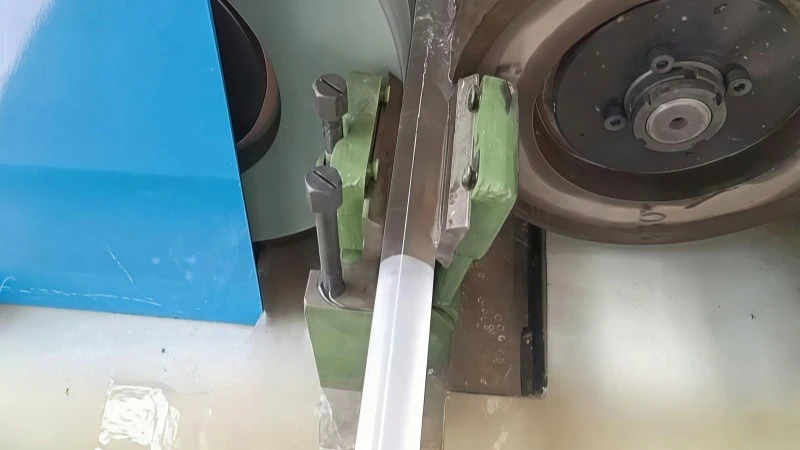
What are the most critical factors to consider when selecting a diamond grinding wheel to achieve flawless glass edges?
To choose the right diamond grinding wheel for glass processing, you must closely match the bond type (metal for roughing, resin for finishing) to your material removal rate, select the precise wheel profile for your desired edge geometry, choose the correct grit size for proper surface preparation, and ensure the tool’s physical dimensions are strictly compatible with your specific CNC or straight-line edging machinery.
Key Factors in Selecting the Correct Bond Type
What exactly is a bond type, and why does it matter so much when grinding glass?
The bond type refers to the matrix material holding the diamond abrasives onto the wheel. Selecting the correct bond1 is critical because it directly dictates the cutting speed, wheel lifespan, and final surface quality. Metal bonds offer maximum durability for rapid material removal and heavy shaping. Conversely, resin bonds provide the necessary elasticity for smooth, defect-free finishing and pre-polishing.
Metal Bond for High Durability and Rough Grinding
Metal bonds typically use strong materials like bronze or steel to lock diamond particles firmly in place. Therefore, these wheels are incredibly tough. They easily withstand high impact and heavy, continuous workloads.
Are you processing very thick architectural glass panels? If so, metal-bonded wheels2 are your first line of defense. They excel specifically at rough grinding operations. This initial process involves stripping away large volumes of raw glass quickly.
Think of a roughing end mill used in CNC3 metalworking. Its primary job is bulk material removal, not achieving a flawless finish. Similarly, a metal bond glass wheel aggressively shapes the raw edge.
Moreover, metal bonds retain their physical shape exceptionally well. This structural integrity prevents the wheel profile from wearing down unevenly during heavy production runs.
Performance Characteristics
- High Wear Resistance: The strong metal matrix prevents premature diamond loss during heavy cuts.
- Excellent Heat Dissipation: Metal efficiently conducts harmful heat away from the friction zone.
- Aggressive Material Removal: Ideal for the very first shaping phase of production.
Typically, the diamond layer depth on a standard commercial metal wheel ranges from 5mm to 10mm. Because manufacturers frequently adjust these depth parameters based on custom production demands, it is advisable to confirm these specifications when ordering your tooling.
Resin Bond for Fine Finishing and Polishing
Resin bonds utilize a synthetic polymer matrix instead of metal. This material is significantly softer than bronze or steel alloys. As a result, resin wheels behave very differently during the machining operation.
The most important advantage of a resin bond is its unique self-sharpening ability. As the wheel grinds against the glass edge, the softer resin wears away steadily. Consequently, fresh, sharp diamond edges are continuously exposed to the workpiece.
This continuous surface renewal ensures a highly consistent, smooth cut. Therefore, resin bonds are strictly utilized for fine finishing and pre-polishing tasks. They effectively remove the deep, visible scratches left behind by the aggressive metal wheels.
Consider the precision honing process used in automotive engine cylinder machining. The honing stone removes microscopic peaks to create a perfectly smooth, precise surface. Resin-bonded wheels perform a very similar, delicate function on glass edges.
Key Finishing Benefits
- Superior Surface Finish: The softer, elastic impact drastically reduces micro-fractures in the glass.
- Consistent Sharpness: The self-dressing nature entirely prevents the wheel surface from glazing over.
- Vibration Dampening: The polymer matrix naturally absorbs slight, unwanted machine vibrations.
Metal vs Resin Bond Comparison
To make the best tooling choice, review this direct performance comparison.
| Feature | Metal Bond Wheels | Resin Bond Wheels |
|---|---|---|
| Primary Function | Rough grinding and shaping | Fine finishing and pre-polishing |
| Matrix Material | Bronze, steel, or metallic alloys | Synthetic polymers (e.g., phenolic) |
| Overall Durability | Extremely high and rigid | Moderate (designed to wear faster) |
| Material Removal | Aggressive and very rapid | Light, controlled, and precise |
| Finish Quality | Leaves visible grinding scratches | Smooth, refined, and scratch-free |
By deeply understanding these fundamental differences, you can sequence your workshop tools correctly. Always start with a tough metal bond for shaping, then transition smoothly to a resin bond for the perfect finish.
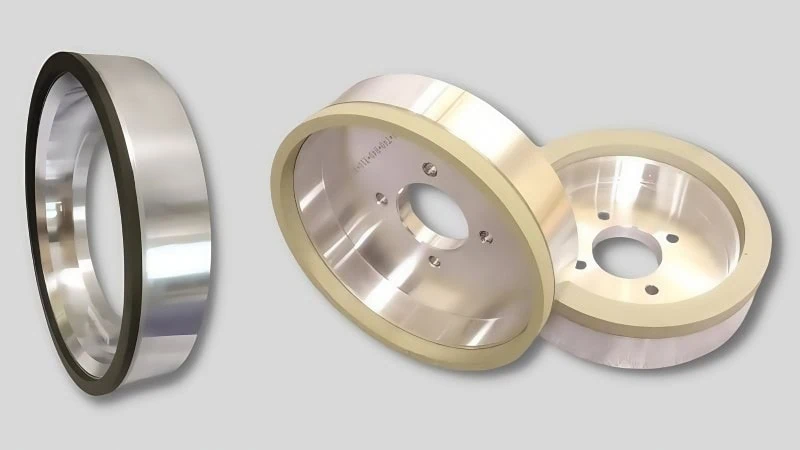
Matching the Wheel Profile to Your Desired Glass Edge
To match the wheel profile accurately, you must select a diamond grinding wheel with a working surface that directly mirrors your required edge geometry. For example, a concave wheel produces a convex pencil edge, while a cylindrical wheel creates a flat edge. Choosing the correct profile ensures precise shaping, minimizes material waste, and guarantees the structural integrity of the finished glass pane.
Pencil Edge Profiles
A pencil edge, often called a C-edge, features a smooth, rounded finish. This profile looks exactly like the rounded cross-section of a traditional wooden dowel.
Why is this shape so popular? It eliminates sharp corners entirely. Therefore, it greatly reduces the risk of chipping during transport and handling.
Think of machining a fillet radius on a heavy steel bracket. The rounded corner distributes mechanical stress evenly, preventing fractures under load. A pencil edge performs the exact same structural function on brittle glass.
You will typically use a continuous rim wheel with a U-shaped groove to achieve this. The groove’s internal radius dictates the final glass curve. Common wheel radii range from 3mm up to 19mm. Always verify exact radius dimensions and custom availability, as tooling standards vary across regions.
Flat Edge with Arris
A flat edge with arris is the most common profile in structural glass processing. It consists of a flat center edge flanked by two small, angled chamfers. These chamfers are called the arris.
The flat section provides a perfect surface for joining or framing. Meanwhile, the arris removes the razor-sharp 90-degree corners.
This is functionally identical to deburring a freshly sheared piece of sheet metal in a fabrication workshop. You must break the sharp edge to make the workpiece safe to handle. Furthermore, removing these micro-cracks is absolutely mandatory before sending any glass into a tempering furnace.
To create this profile, operators usually use a peripheral grinding wheel. The wheel features a flat grinding face with angled edges. The arris angle is typically set at 45 degrees. Industry data shows that over 80% of architectural glass, such as frameless doors, utilizes a flat edge with arris for optimal safety and structural stability.
Trapezoidal and OG Profiles
Sometimes, standard straight edges are simply not enough. Decorative applications often require complex, multi-angled geometries.
A trapezoidal edge features a flat center with steep, pronounced bevels on both sides. Conversely, an OG (Ogee) edge features a continuous, flowing S-curve.
These profiles are heavily used in high-end furniture, such as glass tabletops and decorative mirrors. Shaping these intricate edges requires specialized, highly accurate form wheels.
Consider using a custom form tool on a CNC lathe to cut a complex thread profile. The grinding wheel must mirror the exact decorative pattern you want to transfer securely to the glass. Because these complex shapes remove more material, they require careful machine calibration.
To summarize the key differences, refer to the comparison table below:
| Profile Type | Wheel Groove Shape | Primary Application | Structural Benefit |
|---|---|---|---|
| Pencil Edge | Concave (U-Shape) | Automotive glass, oval tables | Maximum impact resistance |
| Flat with Arris | Flat with angled corners | Architectural doors, partitions | Safest for thermal tempering |
| Trapezoidal | Flat center, deep bevels | Display cases, thick shelving | High aesthetic appeal |
| OG (Ogee) | Complex S-Curve profile | Premium furniture, mirrors | Premium decorative finish |
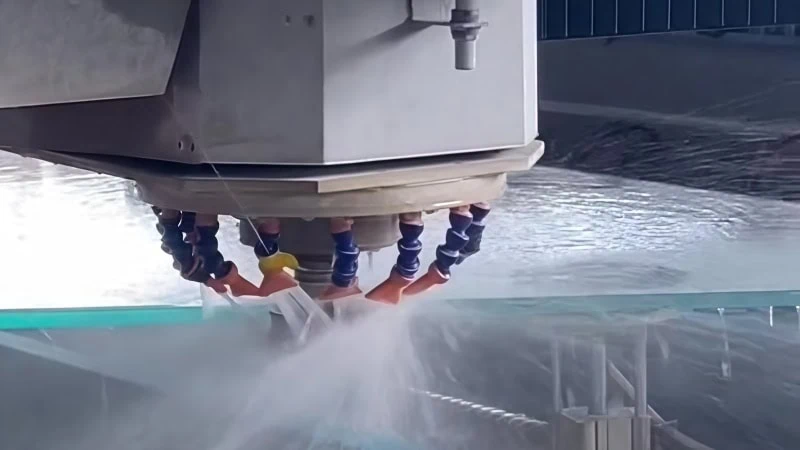
Selecting the Optimal Grit Size for Your Project
Selecting the optimal grit size depends entirely on the volume of glass you need to remove and your required surface finish. You must use a coarse grit, typically between 60 and 120, for rapid bulk material removal. Conversely, transitioning to medium and fine grits (ranging from 150 to 400+) is essential to eliminate deep scratches and properly prepare the glass surface for final polishing.
Coarse Grits for Rapid Stock Removal
Coarse grits are essential when you need to change the size or shape of a glass sheet quickly. These abrasive particles are physically larger and highly aggressive. They act like tiny chisels, digging deep into the raw glass edge.
Think of rough turning a steel shaft on an engine lathe4. You use a heavy-duty cutting tool with a large depth of cut to strip away bulk metal fast. You do not care about the surface finish at this initial stage. Similarly, coarse diamond grits prioritize rapid stock removal over smoothness.
Typically, coarse wheels utilize grit sizes ranging from 60 to 120. Because abrasive grading systems can vary globally, it is important to verify the exact mesh or micron specifications tailored to your region before purchasing.
Using an 80-grit wheel will easily remove several millimeters of glass in a single pass. This aggressive action is highly efficient for sizing large architectural glass panels. However, this high speed comes with a structural trade-off. Coarse grits leave deep scratches and significant subsurface micro-fractures in the material. Consequently, you must always follow up with finer wheels to repair this underlying damage.
Medium to Fine Grits for Surface Preparation
After rough shaping, you must carefully refine the glass edge to restore its structural strength. This is where medium and fine grits become absolutely critical. Their primary purpose is delicate surface preparation, not bulk shaping.
Medium grits usually range from 150 to 240. They effectively bridge the gap between heavy grinding and final smoothing. These specific grits erase the deep gouges left by the coarse roughing wheels. Next, you transition directly to fine grits, which typically range from 270 to 400 and beyond.
Consider the finishing pass on a CNC milling machine. After the roughing tool clears the bulk material, a specialized finishing end mill takes a very shallow, precise cut. This process removes the rough tool marks and creates a perfectly smooth surface. Finer diamond grits perform this exact same function on brittle glass.
These smaller diamond particles take tiny, delicate bites out of the glass edge. Consequently, they drastically reduce the depth of all subsurface micro-fractures. Industry case studies show that properly sequencing your fine grits can increase the impact resistance of the glass edge by over 30%.
A standard best practice in the machining industry is to approximately double your grit number with each successive step. For example, moving directly from a 120-grit wheel to a 240-grit wheel ensures an efficient, safe transition. Skipping intermediate grit sizes will force your fine wheel to work entirely too hard. Ultimately, this mistake leads to rapid tool wear and poor edge quality.
Grit Size Application Guide
To ensure correct tool sequencing, follow this standard industry reference:
| Grit Size Range | Cutting Action | Primary Workshop Application | Surface Finish Result |
|---|---|---|---|
| 60 – 120 | Aggressive | Rapid stock removal and initial sizing | Rough, deep visible scratches |
| 150 – 240 | Moderate | Blending and removing rough tool marks | Semi-smooth, frosted appearance |
| 270 – 400+ | Delicate | Final surface preparation before polishing | Very smooth, fine matte finish |
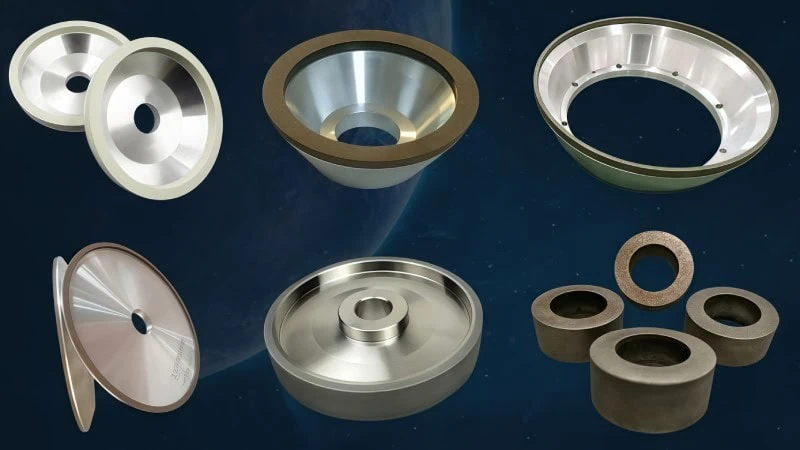
Ensuring Compatibility with Glass Processing Machinery
How do you ensure your new diamond grinding wheels will actually work with your specific glass machinery?
To ensure compatibility, you must precisely match the wheel’s physical dimensions, fitting type, and operational speed to your machine’s spindle specifications. This requires carefully checking the wheel’s outer diameter, inner bore size, and mounting mechanism to prevent severe machine vibrations, poor edge quality, and potential spindle damage.
Wheels for Straight Line Edging Machines
Straight-line edging machines are the heavy workhorses of the glass industry. These machines use a continuous conveyor track to move glass panels horizontally past several stationary grinding spindles. Because the glass moves past fixed points, these machines primarily utilize heavy-duty diamond cup wheels.
Think of a multi-station transfer line in a metal manufacturing plant. A metal block moves down a conveyor, passing under consecutive, fixed milling heads. A straight-line edger operates using this exact same continuous production principle.
Therefore, your grinding wheels must withstand constant, heavy loads without vibrating. Cup wheels feature a wide grinding face that easily handles this continuous pressure. Consequently, they deliver a highly consistent straight edge across large architectural glass panels.
Common wheel diameters for these machines usually measure 130mm or 150mm. Machine spindle speeds typically run around 2,800 RPM. However, machine mounting standards vary heavily between Italian, German, and Chinese equipment brands. Therefore, confirming the exact bore size and screw fitting requirements is essential before installation.
Tooling for CNC Glass Working Centers
CNC glass working centers offer maximum flexibility for complex shapes and internal cutouts. Unlike straight-line machines, CNC centers use a moving spindle head that travels around a stationary glass piece. Therefore, these machines require peripheral diamond wheels rather than cup wheels.
These advanced machines also utilize Automatic Tool Changers (ATC). As a result, every grinding wheel must be mounted onto a highly precise tool holder cone.
Consider a 5-axis CNC metal milling center. To prevent dangerous tool runout at high speeds, the tool holder must be perfectly balanced. CNC glass machines require the exact same level of extreme rotational balance. If a peripheral wheel is slightly off-center, it will ruin the glass profile instantly.
CNC spindles spin incredibly fast, often operating between 4,000 and 8,000 RPM. Because of these high speeds, wheel concentricity is absolutely critical. Furthermore, CNC tool holder cones, such as ISO40 or BT40 standards, have strictly defined dimensions. You must strictly match these specific cone parameters and precise calibration data to prevent costly spindle crashes.
Double Edger Machine Requirements
Double edger machines are designed for massive, high-volume production lines. They process two parallel sides of a glass pane at the exact same time. These robust machines are standard in solar panel and large window manufacturing facilities.
To maintain perfect symmetry, you must install diamond grinding wheels in precisely matched pairs.
This requirement is practically identical to a twin-spindle straddle milling setup in a machine shop. In straddle milling, two parallel cutters must perfectly mirror each other to keep the metal part perfectly symmetrical. On a double edger, your opposing glass wheels must do the exact same thing.
If one wheel wears down faster than its partner, the glass panel will literally grind off-center. Therefore, purchasing wheels from the same manufacturing batch is highly recommended. This ensures the diamond concentration and wear rates are identical.
To help identify the right tooling, review this machine compatibility table:
| Machine Type | Typical Wheel Type | Operational Focus | Mounting Requirement |
|---|---|---|---|
| Straight Line Edger | Diamond Cup Wheels | Continuous straight edges | Standard bore or screw mount |
| CNC Working Center | Peripheral Wheels | Complex shapes, cutouts | ISO/BT Tool Holder Cones |
| Double Edger | Matched Cup Wheels | High-volume parallel edges | Identical matched pairs |
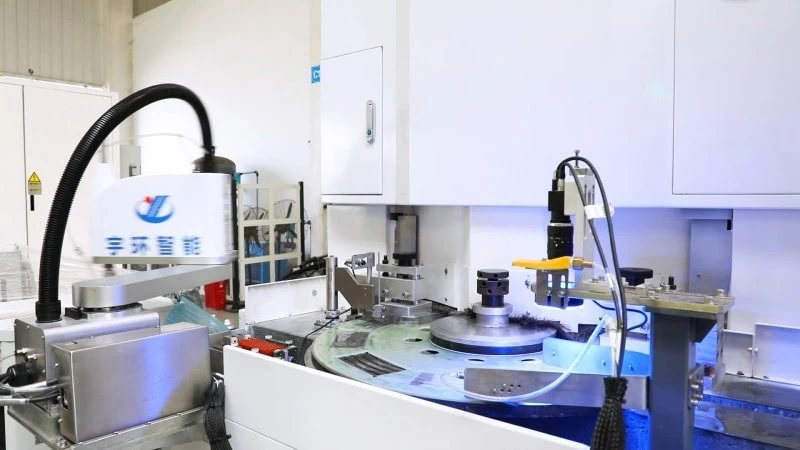
Troubleshooting Common Glass Grinding Defects
To effectively troubleshoot glass grinding defects, operators must continuously monitor machine vibration, wheel sharpness, and coolant delivery. Systematically reducing the feed rate stops edge chipping, dressing the diamond wheel eliminates burn marks, and precisely targeting coolant nozzles maximizes heat extraction, allowing you to consistently maintain flawless edge quality.
Preventing Edge Chipping and Breakage
Edge chipping is the most frequent and costly defect in a glass processing workshop. Brittle glass shatters easily under excessive mechanical stress. Therefore, you must control the cutting forces precisely.
Why does chipping occur? Usually, the machine is simply pushing the glass into the wheel too fast. High feed rates overload the diamond abrasives. Consequently, the diamonds tear the glass away rather than cutting it smoothly.
Think of milling brittle cast iron5 on a manual milling machine. If you crank the machine table too aggressively, the cutting tool will instantly shatter the edges of the iron block. The exact same mechanical failure happens when grinding glass too quickly.
To stop edge chipping, your first step is always to reduce the machine’s feed rate. Slowing down the operation lowers the impact force on the fragile glass edge. Furthermore, you must inspect the machine spindle for any unwanted vibration. Even microscopic spindle runout will cause the wheel to hammer against the glass, creating severe chips.
Addressing Burn Marks and Overheating
Burn marks appear as cloudy, opaque streaks along the finished glass edge. This defect indicates severe localized overheating. The friction between the wheel and the glass has exceeded safe operating temperatures.
When a diamond wheel becomes dull, the abrasive particles lose their sharp cutting edges. The wheel surface glazes over completely. As a result, the tool simply rubs against the workpiece instead of cutting it cleanly.
Consider a dull drill bit trying to penetrate hardened tool steel. The blunt bit spins rapidly, generating massive amounts of heat, but it removes zero material. Eventually, the friction turns the steel blue. A dull, glazed diamond wheel creates this identical friction issue on a glass edge.
To fix this problem, you must dress the grinding wheel6 immediately. Dressing involves grinding an aluminum oxide stick against the diamond wheel. This abrasive action strips away the melted bond material and exposes fresh, sharp diamonds. Generally, operators use an aluminum oxide dressing stick7 that is one or two grit sizes finer than the grinding wheel, though optimal specifications can vary depending on the specific hardness of your wheel’s bond.
Optimizing Coolant Flow and Lubrication
Coolant8 is the absolute lifeline of any glass grinding operation. Water acts as both a primary heat sink and a vital lubricant. Without proper coolant flow, your diamond wheels will fail rapidly.
Many operators make the mistake of simply flooding the general work area. This is highly inefficient. You must aim the coolant nozzles directly at the exact point where the wheel contacts the glass.
Just like high-pressure flood coolant in a CNC lathe operation, the fluid must perfectly target the cutting insert’s tip. If the coolant merely splashes onto the surrounding metal, the tool will still overheat and shatter. Similarly, the water stream must physically penetrate the friction zone on the glass.
Furthermore, you must maintain proper coolant volume and water pressure. Low pressure fails to flush away the tiny glass particles, known as swarf. If swarf builds up on the wheel, it acts like abrasive sandpaper, causing deep surface scratches. Typically, coolant pressure should remain strictly between 2 to 3 bar.
To easily diagnose common issues on the shop floor, refer to this troubleshooting matrix:
| Visual Defect | Most Likely Cause | Immediate Corrective Action |
|---|---|---|
| Large Edge Chips | Excessive feed rate or heavy vibration | Reduce machine feed rate immediately |
| Cloudy Burn Marks | Glazed wheel surface (dull diamonds) | Dress the wheel with an alumina stick |
| Deep Surface Scratches | Glass swarf buildup on the wheel | Increase coolant pressure to flush debris |
| Uneven Edge Profile | Loose spindle or worn machine bearings | Inspect and tighten the machine spindle |
Conclusion
Successfully processing glass heavily relies on making informed, precise tooling decisions. By carefully evaluating bond types, grit sizes, edge profiles, and machine compatibility, you can significantly improve your production quality and reduce costly material waste. Regular troubleshooting and proper coolant management will further extend the life of your tools and ensure a consistent, flawless finish on every glass panel.
If you require tailored advice on selecting the optimal grinding wheels for your specific machinery and production requirements, please contact us.
- Selecting the correct bond1 – ZYDiamondTools guide on choosing the right superabrasive bond for glass grinding processes.
- Metal-bonded wheels2 – ZYDiamondTools product page detailing metal bond diamond and CBN grinding wheels.
- CNC3 – Wikipedia article explaining the principles and applications of Computer Numerical Control machining.
- Engine lathe4 – Wikipedia overview of lathes and their use in metalworking and material removal.
- Cast iron5 – Wikipedia resource defining the properties, brittleness, and machining characteristics of cast iron.
- Dress the grinding wheel6 – ZYDiamondTools practical guide on the correct techniques for dressing and truing diamond wheels.
- Aluminum oxide dressing stick7 – ZYDiamondTools product page featuring White Aluminum Oxide (WA) dressing sticks for superabrasive wheels.
- Coolant8 – Wikipedia article defining cutting fluids, their role in heat extraction, and lubrication during machining.