-
Whatsapp: +86 13526572721
-
Email: info@zydiamondtools.com
-
Address: AUX Industrial Park, Zhengzhou City, Henan Province, China
-
Whatsapp: +86 13526572721
-
Email: info@zydiamondtools.com
-
Address: AUX Industrial Park, Zhengzhou City, Henan Province, China

The Ultimate Guide to Choosing Grinding Wheels: SiC vs. WA vs. A Abrasives
What are the exact differences between Silicon Carbide (SiC), White Fused Alumina (WA), and Brown Fused Alumina (A) grinding wheels, and how do you choose the right one for your machining application?
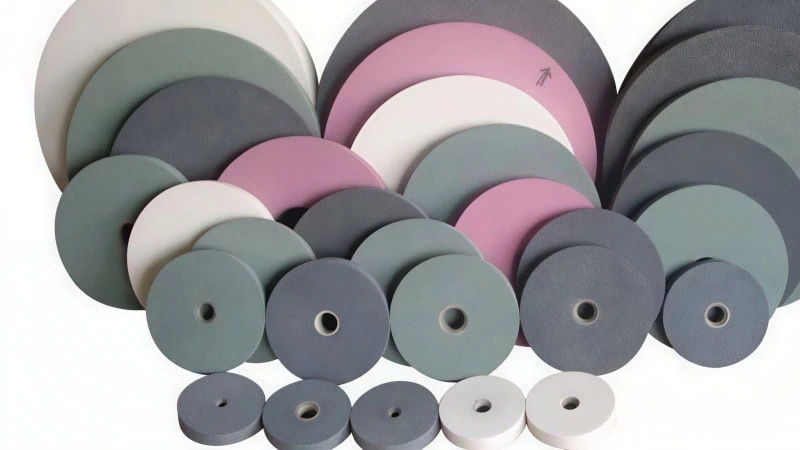
The primary differences lie in their specific hardness, toughness, and friability. Brown Fused Alumina (A) offers high toughness for heavy-duty grinding on standard ferrous metals. White Fused Alumina (WA) provides highly friable, self-sharpening grains for cool cutting on hardened steels. Silicon Carbide (SiC) delivers extreme hardness and sharp cutting edges strictly for non-ferrous metals and ultra-brittle materials.
Core Material Properties and Grain Characteristics
What exactly makes SiC, WA, and A abrasives perform so differently during the grinding process?
The performance of these grinding wheels depends directly on two main physical properties: hardness and toughness. Hardness determines the ability of the abrasive grain to penetrate a surface. Meanwhile, toughness dictates how well the grain resists breaking under heavy pressure. Furthermore, these microscopic structures dictate if a wheel will hold its shape, fracture to stay sharp, or break down quickly.
| Abrasive Type | Grain Shape | Hardness Level | Toughness Level | Friability (Self-Sharpening) |
|---|---|---|---|---|
| Brown Fused Alumina (A) | Blocky & Robust | Moderate | Very High | Low |
| White Fused Alumina (WA) | Angular & Sharp | High | Moderate | High |
| Silicon Carbide (SiC) | Needle-like | Very High | Low | Very High |
Brown Fused Alumina A High Toughness for Heavy Duty
Brown Fused Alumina is widely considered the workhorse of the machine shop. It features a blocky, robust grain structure. Therefore, it possesses exceptionally high toughness. What does high toughness mean in practice? It simply means the abrasive grains can withstand massive impact forces without shattering.
As a result, the grains hold their physical shape for a long time. This is very similar to using a thick, heavy-duty roughing end mill. That cutting tool takes a heavy beating during roughing passes without the flutes chipping. Consequently, A-type wheels are incredibly durable. They do not break down easily under high grinding forces.
However, this durability comes with a distinct trade-off. Because the grains do not fracture easily, they will eventually become dull. When they dull, they generate more friction and heat. (Note: The exact toughness of this abrasive often depends on its specific titanium dioxide content, which can vary slightly between manufacturers.)
White Fused Alumina WA Self Sharpening for Cool Cutting
White Fused Alumina is essentially a highly purified version of the brown type. Through this purification process, the material becomes slightly harder. However, it also becomes significantly more brittle. In the abrasive industry, we refer to this specific brittleness as “friability1.”
Why is a brittle grain actually useful? Because of its high friability, WA grains micro-fracture under moderate grinding pressure. Instead of becoming dull and rubbing the part, the grain splinters. As a result, this splintering constantly exposes brand new, razor-sharp cutting edges.
Think of it like using a highly rigid but brittle ceramic turning insert. The insert cuts extremely sharply but will micro-chip if the cutting forces get slightly too high. Because the WA wheel is always exposing fresh edges, it cuts very cleanly. Consequently, it creates much less friction. This “cool cutting” action is its most valuable physical property.
Silicon Carbide SiC Extreme Hardness for Brittle Materials
Silicon Carbide2 is entirely different from the alumina family. It is an extremely hard synthetic compound. In fact, it is significantly harder than both WA and A abrasives. Furthermore, its crystal structure forms extremely sharp, needle-like grains.
These sharp grains can easily penetrate almost any dense physical structure. However, SiC has incredibly low toughness. Therefore, the grains crush and break down very quickly when subjected to heavy impacts. You can compare this to a solid carbide micro-drill used in precision machining. The ultra-hard drill penetrates tough materials effortlessly, but its fine tip will snap instantly if subjected to lateral vibrations.
There are two primary variations of this abrasive:
- Black Silicon Carbide (C): Contains slightly more impurities. It remains tough enough for basic, rigid grinding tasks.
- Green Silicon Carbide (GC): Features much higher purity. Therefore, it is even harder and more brittle than the black version.
Because it is so hard and sharp, SiC cuts aggressively. However, its low toughness means the wheel itself will naturally wear away faster than alumina alternatives.
Matching the Abrasive to Your Workpiece Material
How do you determine exactly which abrasive material is the correct match for the specific metal you need to grind?
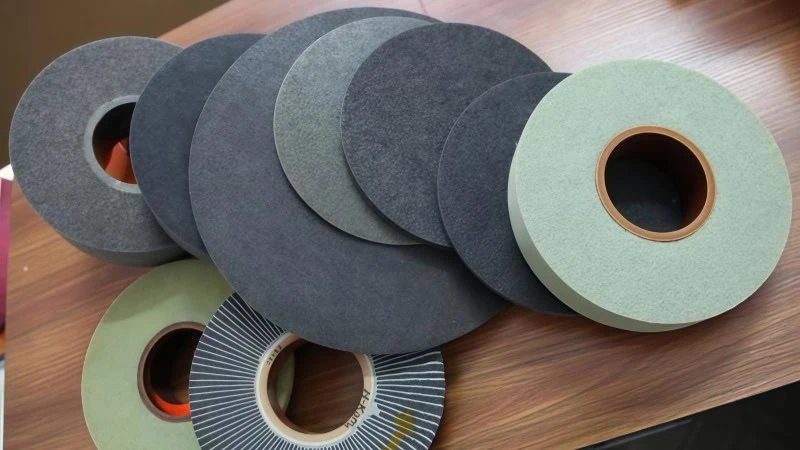
To match an abrasive to a workpiece, you must pair the abrasive’s physical properties with the metal’s tensile strength3 and chemical composition. Brown Fused Alumina (A) is ideal for high-tensile ferrous metals like carbon steel. White Fused Alumina (WA) suits hardened alloys requiring cool cutting. Meanwhile, Silicon Carbide (SiC) is strictly for non-ferrous metals and brittle materials, as it chemically degrades when used on standard steel.
| Workpiece Material Category | Common Industry Examples | Recommended Abrasive |
|---|---|---|
| General Ferrous Metals | Mild steel, Carbon steel, Wrought iron | Brown Fused Alumina (A) |
| Non-Ferrous & Brittle | Aluminum, Brass, Tungsten Carbide | Silicon Carbide (SiC) |
| Hardened & Heat-Sensitive | Tool steel, High-speed steel (HSS) | White Fused Alumina (WA) |
Best Choices for Carbon Steels and General Ferrous Metals
Carbon steels and general ferrous metals possess high tensile strength. Consequently, they resist being cut. When you grind these tough metals, the abrasive grains encounter massive resistance. Therefore, you need an abrasive that will not crumble under heavy, sustained pressure.
Brown Fused Alumina (A) is the industry standard for this application. Because its grains are blocky and tough, they dig deeply into standard steel without shattering. You can compare this to using a heavy-duty High-Speed Steel (HSS)4 drill bit for boring into structural steel. The HSS bit withstands the rough, high-torque environment much better than a more brittle, solid carbide bit would.
For general workshop materials like mild steel, structural steel, and malleable cast iron, the ‘A’ wheel provides the best balance of material removal and wheel longevity. It simply outlasts other abrasives when processing everyday ferrous metals.
Why SiC is Essential for Non Ferrous Metals and Tungsten Carbide
Non-ferrous metals, such as aluminum and copper, present a unique machining challenge. They are relatively soft, but they are also very “gummy.” During grinding, these gummy metals heat up quickly and melt into the wheel. This causes severe clogging, known in the industry as “loading.”
Silicon Carbide (SiC) is essential here. Its sharp grains shear through soft metals cleanly. More importantly, its brittle nature means the grains constantly break away. This constant shedding prevents the aluminum from packing into the pores of the wheel. Think of it like using a highly polished Polycrystalline Diamond (PCD) insert on an aluminum milling job. The sharp, slick edge shears the material cleanly before it can weld to the tool.
Furthermore, SiC is mandatory for ultra-hard, brittle materials like tungsten carbide or industrial ceramics. Only SiC is hard enough to penetrate these surfaces effectively.
The Chemical Danger of SiC on Steel
There is a critical rule in grinding: never use Silicon Carbide on standard steel. At high grinding temperatures, a chemical reaction occurs. The carbon in the SiC abrasive actually dissolves into the iron matrix of the steel. As a result, the grinding wheel undergoes severe chemical wear and degrades rapidly.
Safe Options for Hardened and Heat Sensitive Alloys
When steel undergoes heat treatment, its internal structure changes completely. It becomes much harder, often exceeding 50 HRC (Rockwell Hardness Scale)5. Consequently, it becomes highly sensitive to friction and heat. If you use a tough Brown Fused Alumina wheel on hardened tool steel, the dull grains will rub against the hard surface. This generates intense heat and ruins the part.
White Fused Alumina (WA) is the safest and most effective option for these heat-sensitive alloys. Because WA is highly friable, its grains splinter continuously. This micro-fracturing action constantly exposes fresh, sharp edges. Rather than transferring heat into the workpiece, the fractured abrasive grains carry the heat away as they break off.
This process is very similar to taking light, fast passes with a sharp finishing end mill to avoid work-hardening a delicate part. By using a WA wheel, you protect the metallurgical integrity of expensive aerospace alloys and hardened tool steels.
Solving Common Grinding Problems Through Material Selection
How exactly can changing your abrasive material solve unexpected grinding defects like thermal damage or rapid wheel wear?
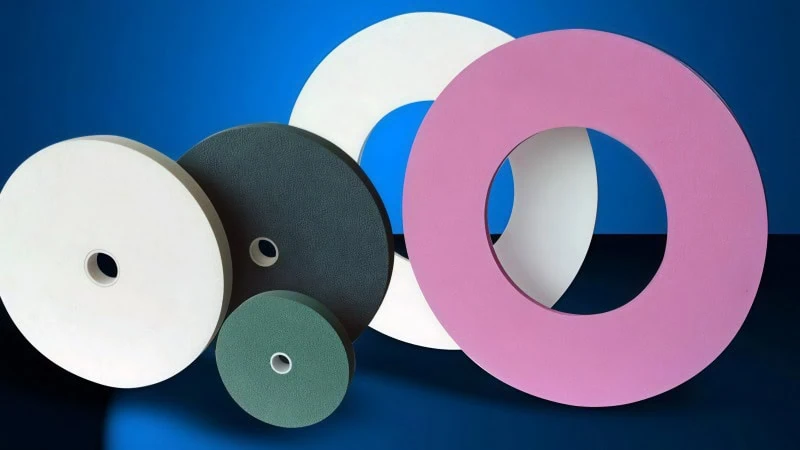
Most grinding failures happen because the abrasive’s physical behavior fundamentally conflicts with the cutting environment. To troubleshoot effectively, you must eliminate thermal burn marks by switching to self-sharpening White Fused Alumina (WA), stop rapid form loss by utilizing durable Brown Fused Alumina (A), and fix poor finishes on hard materials by deploying sharp Silicon Carbide (SiC).
| Common Grinding Problem | Primary Root Cause | Recommended Abrasive Solution |
|---|---|---|
| Severe Burn Marks | Grains are dulling and rubbing. | Switch to White Fused Alumina (WA) |
| Rapid Profile Loss | Grains are fracturing too easily. | Switch to Brown Fused Alumina (A) |
| Poor Brittle Finish | Grains are plowing instead of cutting. | Switch to Silicon Carbide (SiC) |
Eliminating Workpiece Burn Marks with Proper Abrasive Type
Workpiece burn is a critical thermal failure. You can easily spot it by looking for straw, brown, or blue discoloration on the metal’s surface. This discoloration means the metal absorbed too much heat. Consequently, the heat has likely ruined the part’s internal metallurgical structure.
Why does this burning happen? It usually occurs when you use a tough abrasive, like Brown Fused Alumina (A), on a very hard workpiece. The strong grains refuse to break. Instead, they quickly lose their sharp edges and become dull.
Imagine trying to part off a steel rod on a lathe using a completely worn-out parting tool. Instead of shearing a clean chip, the dull tool violently rubs against the spinning metal. This creates massive friction and intense heat. A dull grinding wheel creates the exact same rubbing effect.
To solve this, you must switch to a highly friable abrasive like White Fused Alumina (WA). Because WA is brittle, its grains splinter before they can become dull. Therefore, the wheel constantly exposes fresh, razor-sharp edges. This self-sharpening action prevents friction. As a result, the heat leaves with the metal chips, keeping your workpiece perfectly cool.
Reducing Rapid Wheel Wear and Form Loss
Sometimes, your main problem is not the workpiece, but the wheel itself. You might notice the wheel shrinking extremely fast. Furthermore, it might lose its precise geometric profile, forcing you to constantly pause the machine to dress the wheel. This rapid wear destroys your productivity.
This problem typically happens when your abrasive is too brittle for the required grinding pressure. If you apply heavy feed rates using a WA or SiC wheel, the grains will shatter instantly upon impact.
Think of a heavy-duty roughing operation on a CNC mill. If you use a delicate, high-flute-count finishing end mill for deep slotting, the tool will chip and lose its diameter almost instantly. You need a thick, robust roughing cutter for that job.
Similarly, to stop rapid wheel wear, you should switch to Brown Fused Alumina (A). Its blocky, tough structure withstands heavy impacts without crumbling. It holds its shape far longer during aggressive stock removal.
Note: While the abrasive grain is crucial, the wheel’s actual retention ability also depends heavily on its specific bond grade6 (typically scaled A to Z). Always consult technical data sheets to ensure the bond matches your operational pressures.
Fixing Poor Surface Finishes on Hard Materials
Achieving a mirror-like finish on highly brittle or exceptionally hard materials can be frustrating. Operators often see chatter marks, galling, or deep, uneven scratches. This happens because standard alumina abrasives cannot easily penetrate these dense surfaces. Instead of cleanly slicing the material, the grains bounce, skip, or plow through the surface.
To fix this specific finish issue, you must deploy Silicon Carbide (SiC). SiC features a unique, needle-like crystal structure. Furthermore, it is significantly harder than standard alumina.
Consider a precision hard-turning operation using a CBN (Cubic Boron Nitride) insert7. The ultra-hard, sharp edge cleanly shears the hardened steel without dragging or plowing. Because SiC grains are so sharp and hard, they perform a similar clean shearing action on difficult substrates like tungsten carbide or industrial ceramics. Consequently, switching to a fine-grit SiC wheel is the most reliable way to produce a flawless, highly polished finish without surface tearing.
Precision vs Rough Grinding Selection Criteria
How do you balance the need for aggressive material removal with the strict tolerance requirements of precision grinding?
Your selection depends entirely on balancing your target material removal rate against your final tolerance limits. For aggressive rough grinding and maximum stock removal, Brown Fused Alumina (A) provides the necessary durability to withstand heavy cutting forces. Conversely, for precision grinding that requires strict dimensional accuracy and fine finishes, White Fused Alumina (WA) and Silicon Carbide (SiC) provide the sharp, micro-fracturing edges needed for controlled cuts.
| Application Goal | Priority Focus | Recommended Abrasive | Typical Grit Range |
|---|---|---|---|
| Rough Grinding | High Material Removal | Brown Fused Alumina (A) | Coarse (24 – 46) |
| Precision Grinding | Tight Tolerances | WA (Steel) / SiC (Brittle) | Fine (60 – 120+) |
High Stock Removal Applications
Rough grinding operations focus purely on efficiency. The primary goal is moving metal as quickly as possible. You are not worried about a mirror finish here. Instead, you want a high Material Removal Rate (MRR)8. Common examples include grinding rough castings, leveling heavy weld seams, or rapid centerless grinding of steel billets.
To achieve a high MRR, the grinding wheel faces massive physical resistance. Therefore, the abrasive grains must be incredibly tough. Brown Fused Alumina (A) dominates these heavy-duty applications. Its blocky grains can absorb severe impacts without shattering prematurely.
Think of this process like using a large indexable shell mill on a CNC milling machine. The shell mill takes deep, aggressive cuts to clear away bulk material rapidly. It uses thick, durable inserts that will not chip under heavy spindle loads. Similarly, a coarse-grit ‘A’ wheel acts like that roughing tool. It digs deep into the metal and removes large chips without destroying itself.
For these aggressive applications, operators typically use coarse grit sizes, usually between 24 and 46 grit. An open wheel structure is also critical here, as it provides enough space for the large metal chips to escape safely. Optimizing grit size and porosity based on your specific spindle horsepower and coolant pressure is essential for success.
Achieving High Surface Finish and Strict Dimensional Accuracy
Precision grinding is entirely different from roughing. In operations like cylindrical grinding or profile grinding, you often need to hold tolerances within a few microns. Furthermore, you must leave a smooth, flawless surface.
In this environment, aggressive cutting forces are your enemy. Heavy forces push the grinding wheel away from the workpiece. This mechanical movement is called deflection. Deflection ruins your dimensional accuracy and creates uneven surfaces. To prevent deflection, you need a wheel that cuts with very little pressure.
This is where highly friable abrasives excel. For hardened steels, White Fused Alumina (WA) is the top choice. For tungsten carbide or aerospace ceramics, Silicon Carbide (SiC) is strictly required. Both of these abrasives micro-fracture easily under light pressure. Therefore, they constantly present sharp, new cutting edges to the workpiece.
You can compare this precision work to taking a final “spring pass” on a manual lathe. You use a razor-sharp, positive-rake turning tool to lightly shave off the last thousandth of an inch. You use very light pressure to avoid pushing the part out of alignment. WA and SiC wheels perform this exact same delicate shaving action.
To achieve strict dimensional accuracy, you must also use finer grit sizes. These typically range from 60 to 120 grit or higher. The smaller grains take tiny, precise bites out of the material. Consequently, they leave a superior surface finish while keeping the final dimensions perfectly on target.
Conclusion
Selecting the correct grinding wheel is not just a matter of preference; it is a critical engineering decision that directly impacts your productivity, part quality, and tooling costs. By understanding the fundamental differences in hardness, toughness, and friability between Brown Fused Alumina (A), White Fused Alumina (WA), and Silicon Carbide (SiC), you can easily eliminate common workshop problems like thermal burn, rapid wheel wear, and poor finishes. Always match your abrasive’s physical properties to the tensile strength and chemical composition of your workpiece.
If you need further technical guidance on selecting the perfect wheel for your specific precision grinding or roughing requirements, please feel free to contact us.
References
- Friability1 – Wikipedia article explaining the concept of friability and how materials break down under pressure.
- Silicon Carbide2 – Comprehensive overview of the properties, structure, and applications of Silicon Carbide.
- Tensile Strength3 – Detailed explanation of ultimate tensile strength and its significance in material science.
- High-Speed Steel (HSS)4 – Information detailing the composition and industrial usage of High-Speed Steel cutting tools.
- Rockwell Hardness Scale5 – Educational page defining the Rockwell scale used to measure the indentation hardness of materials.
- Grinding Wheel Bond Types6 – ZYDiamondTools article explaining the different bond types and how they affect wheel performance.
- CBN Cutting Tools Guide7 – ZYDiamondTools comprehensive overview on the properties and applications of Cubic Boron Nitride (CBN).
- Material Removal Rate (MRR)8 – Wikipedia article covering the engineering principles behind material removal rates in machining.