-
Whatsapp: +86 13526572721
-
Email: info@zydiamondtools.com
-
Address: AUX Industrial Park, Zhengzhou City, Henan Province, China
-
Whatsapp: +86 13526572721
-
Email: info@zydiamondtools.com
-
Address: AUX Industrial Park, Zhengzhou City, Henan Province, China

Key Industrial Applications and Best Practices for Oil Stones
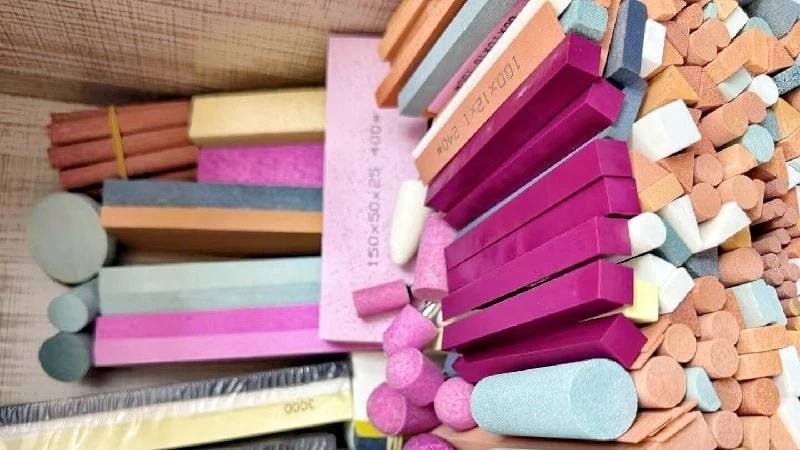
How do industrial oil stones deliver the critical precision and surface finishes required across modern heavy-duty manufacturing processes?
Industrial oil stones act as rigid, highly controlled abrasive tools essential for achieving strict geometric tolerances and specific surface roughness parameters in precision manufacturing. By effectively removing tough machining layers, generating specialized oil-retaining textures, and safely stripping burrs without distorting critical dimensions, these abrasive stones serve as foundational instruments for mold polishing, bore finishing, and component deburring.
Mold and Die Polishing Operations
In mold and die polishing, oil stones provide a rigid, controlled cutting action that effectively removes hard machining layers and establishes exact geometric shapes. Therefore, they allow toolmakers to achieve precise surface finishes on complex mold cavities without distorting critical tolerances or altering the fundamental design.
Removing EDM Scale and CNC Machining Marks
Electrical Discharge Machining (EDM)1 often leaves a hard, brittle skin on the metal surface. This rough skin is called the recast layer. Similarly, CNC milling leaves small ridges known as tool marks. Do you want these imperfections transferring to your final molded plastic parts? Certainly not.
First, operators must remove these tough layers to reveal the base metal underneath. Oil stones are perfect for this heavy-duty task. Their rigid structure slices through the hard peaks efficiently. Think of a face mill cutting the rough outer crust off a raw steel billet. An oil stone works exactly the same way on a micro level. It shears off the tough EDM scale instead of simply sliding over it like flexible sandpaper would.
Typically, toolmakers use coarse aluminum oxide stones for this initial step. For example, an EDM recast layer might easily reach a hardness of 50 to 60 HRC. Therefore, you need a highly aggressive abrasive. Usually, professionals start with a 150-grit to 220-grit stone to break this surface. However, specific grit performance and hardness ratings can vary based on the abrasive supplier and the exact steel alloy. Always verify these specific parameters with your manufacturer to ensure optimal cutting efficiency.
Navigating Complex Cavities and Blind Holes
Mold cavities are rarely simple flat surfaces. Instead, they feature deep slots, thin ribs, and tight blind holes. Reaching these restricted areas is very challenging for automated equipment.
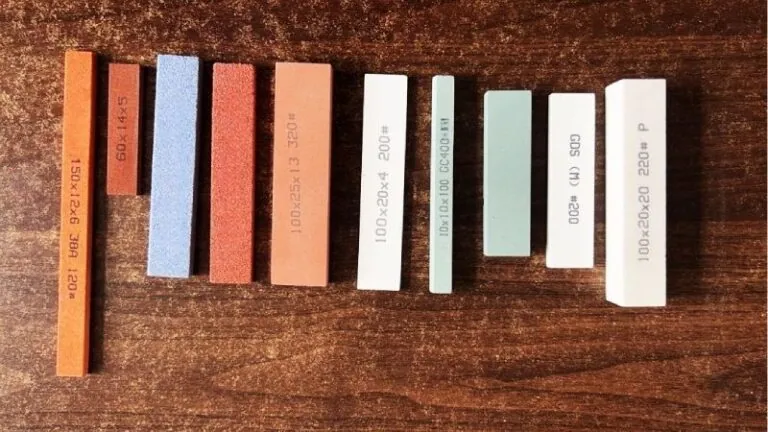
Fortunately, oil stones are manufactured in various precise shapes and sizes. Toolmakers can even grind the stones further to fit custom profiles. Imagine a custom-shaped EDM electrode sinking directly into a specific mold cavity. Similarly, a specially shaped oil stone fits perfectly into tight corners to maintain exact geometry. It ensures that sharp inner corners do not become accidentally rounded during the polishing phase.
Here is a quick guide to matching standard stone shapes with specific mold features:
| Oil Stone Shape | Ideal Cavity Application |
|---|---|
| Square | Flat bottom surfaces and sharp 90-degree corners. |
| Triangle | Acute angles, tight V-shaped grooves, and complex sharp corners. |
| Round | Curved surfaces, internal radii, and sweeping contours. |
| Flat/Rectangular | Wide, open flat surfaces, parting lines, and shallow drafts. |
By selecting the correct shape, operators can easily polish difficult blind holes. Furthermore, they maintain the strict structural integrity of the original mold design throughout the entire process.
Achieving Specific Surface Roughness Parameters
After removing the initial rough marks, the primary goal shifts. The operator must now prepare the surface for final high-gloss polishing. This means reaching a specific Roughness Average (Ra)2 target.
To achieve this, toolmakers use a systematic step-by-step process. They progressively move from coarse stones to much finer stones. During this process, they utilize an alternating directional polishing technique. This means they change the polishing direction by 45 to 90 degrees with each new grit size. Consequently, this visual technique immediately highlights any remaining deep scratches left from the previous step.
For instance, preparing a mold for a high-gloss SPI A-3 finish requires strict discipline. You cannot jump straight from a rough cut to using fine diamond paste. You must first use oil stones sequentially. Often, operators will finish this stage using a 600-grit or 800-grit stone. This systematic reduction in surface roughness ensures a completely flat, uniform base layer. Ultimately, this rigid foundation prevents a wavy appearance, often called “orange peel,” on the final injection-molded product.
Cylinder Honing and Bore Finishing
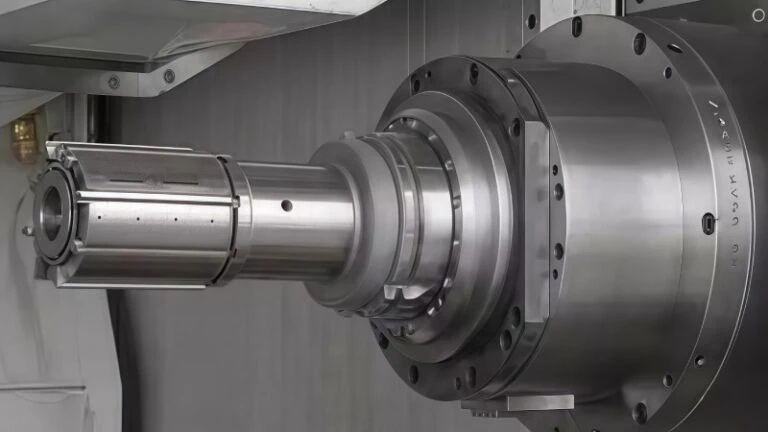
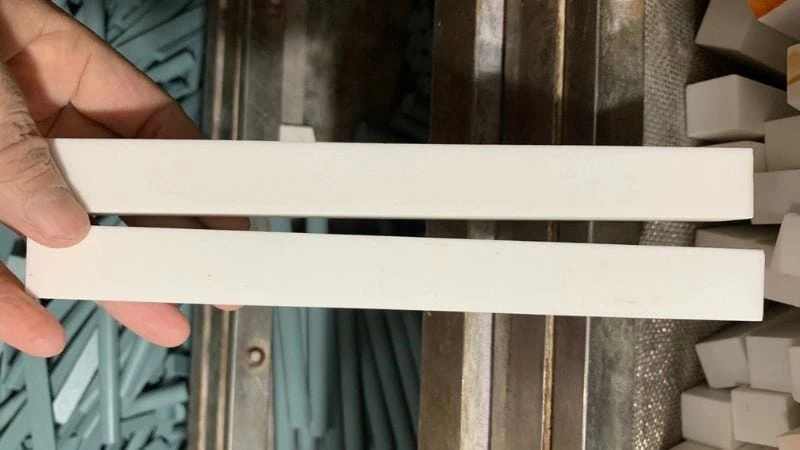
Mounted on expanding honing heads, industrial oil stones perform a low-speed abrading process to perfectly refine internal bores. They simultaneously remove minor geometric defects left by previous boring operations and generate a specific surface texture for oil retention, ensuring internal cylinders strictly meet exact dimensional tolerances.
Generating Optimal Cross-Hatch Patterns
After a cylinder is bored, the surface is often too smooth or incorrectly textured. Why is this specific texture pattern necessary? A perfectly smooth cylinder wall simply cannot hold lubricating oil. Therefore, the moving piston rings would quickly scrape all the oil away. This friction causes extreme heat and rapid engine failure.
To solve this, honing machines use oil stones to create a specific cross-hatch pattern. The honing tool rotates and moves up and down at the exact same time. Consequently, this dual motion carves tiny, intersecting grooves into the metal. Think of a machinist hand-scraping a cast-iron machine way. The scraped pockets hold the way oil. Similarly, these cross-hatch grooves retain lubricating oil inside the cylinder.
Usually, engineers target a cross-hatch angle between 30 and 45 degrees. The exact angle and required grit size dictate the final performance and should be meticulously matched to the specific engine block material and piston ring type to ensure proper oil retention. Ultimately, this exact pattern extends the lifespan of the moving internal parts.
Correcting Out-of-Round and Tapered Bores
Machining a deep, narrow hole is incredibly difficult. Heavy boring bars often vibrate or deflect slightly. Consequently, this deflection leaves minor geometric errors in the cylinder. The bore might be tapered, barrel-shaped, or slightly out-of-round. How can manufacturers fix these hidden geometric errors?
They use rigid industrial oil stones. Unlike flexible sandpaper, oil stones do not bend to follow the existing crooked shape. Instead, they act exactly like a rigid, adjustable reamer. The honing tool expands the stones with equal outward pressure. Therefore, the hard abrasive only cuts the high spots or the tightest areas first.
For example, a hydraulic cylinder might have a 0.002-inch taper after a rough turning process. The oil stones will slowly grind the narrow end. They will not cut the wider end until the entire cylinder is perfectly straight. Ultimately, this rigid cutting action restores the true cylindrical geometry.
Sizing Hydraulic Cylinders and Engine Blocks
Correcting the shape is only half the job. Manufacturers must also hit the exact final dimension. This precise process is called sizing. Rough boring removes metal quickly, but it completely lacks extreme accuracy. Honing uses fine oil stones to remove the final microscopic layers of metal.
For instance, hydraulic cylinders require incredibly tight seals to prevent fluid leaks under high pressure. Engine blocks need exact clearance between the piston and the cylinder wall. Therefore, oil stones gently enlarge the bore to the exact required diameter.
| Machining Process | Primary Manufacturing Goal | Typical Tolerance Level | Resulting Surface Finish |
|---|---|---|---|
| Rough Boring | Rapid bulk material removal | ±0.005 inches | Rough, directional tool lines |
| Oil Stone Honing | Final sizing and exact geometry | ±0.0001 inches | Precise, uniform cross-hatch |
As shown, oil stones provide the final precision that standard cutting tools cannot reach. Tolerances frequently reach an impressive ±0.0001 inches (2.5 microns). This exact sizing guarantees that assembled industrial components fit together flawlessly.
Precision Deburring and Edge Blending
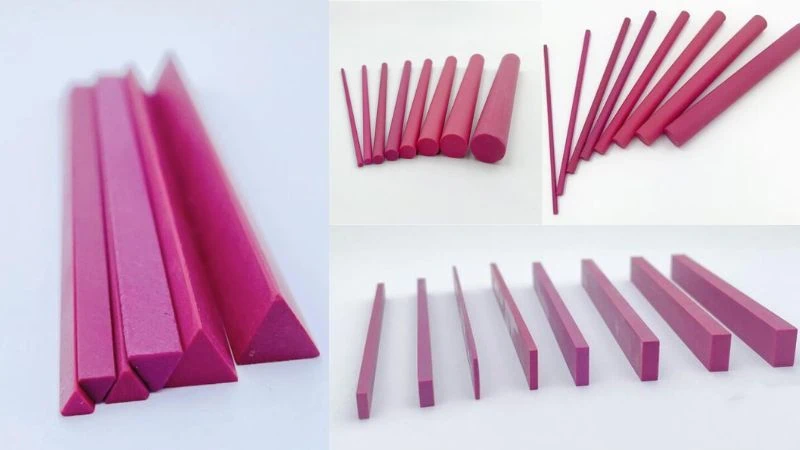
Industrial oil stones provide a highly controlled, localized cutting action that specifically targets raised burrs and sharp edges. Unlike aggressive grinding wheels or unpredictable tumbling media, hand-held or miniature stones gently shear away excess material, blending edges smoothly while strictly preserving the geometric tolerances of the surrounding machined surfaces.
Treating Machined Aerospace and Medical Components
The aerospace and medical industries manufacture highly critical components. They frequently use tough, exotic metals like titanium, Inconel3, and surgical-grade stainless steel. During the CNC machining process, cutting tools leave behind tiny, sharp flakes of metal called burrs. You must remove these burrs completely. Why?
In a jet engine, a sharp edge concentrates physical stress. Over time, this localized stress causes premature fatigue failure. Similarly, in medical implants, a sharp burr can severely damage surrounding human tissue.
To fix this, machinists use fine-grit oil stones. Think of how a microscopic chip on a carbide turning insert causes the whole cutting tool to shatter under heavy pressure. A remaining burr creates that exact same dangerous stress point on a turbine blade. Therefore, workers use stones to smoothly rub away these sharp defects. Usually, operators select 320-grit or 400-grit stones to safely sheer away excess material without gouging these expensive exotic metals.
Removing Micro-Burrs from Intersecting Holes
Many industrial parts feature complex internal fluid channels. Hydraulic manifolds and diesel fuel injectors are great examples. When a drill cuts through an existing internal channel, it violently pushes out metal. This creates a hidden, internal micro-burr directly at the intersection. If this burr breaks off during operation, it will instantly clog a critical fluid valve.
Standard deburring tools often cannot reach these deep internal corners. Fortunately, miniature oil stones solve this exact problem. Manufacturers produce incredibly thin, long abrasive sticks. Machinists insert these small stones directly into the bores. Then, they carefully file away the internal burr.
This action is very similar to using a specialized back-chamfering tool on a CNC mill to clean the hidden underside of a drilled plate. The rigid stone cleanly snaps the burr off at the root. Consequently, the internal hydraulic pathway remains completely smooth, clear, and safe for fluid transfer.
Standardizing Edge Radii on Finished Parts
Engineering blueprints rarely allow random, sharp corners. Instead, they require a specific, standardized edge radius. Simply scraping a machined part with a rough hand file is too inconsistent. It creates a flat, uneven chamfer, not a smooth curve. Furthermore, it relies too much on the operator’s heavy hand.
Oil stones excel at standardizing these machined edges. They offer precise, tactile feedback to the machinist. By sweeping the stone along the edge at a steady angle, the operator creates a perfectly uniform, rounded profile. This exact radius prevents parts from scratching each other during final assembly.
| Deburring Method | Edge Consistency | Risk of Dimensional Change | Ideal Application |
|---|---|---|---|
| Vibratory Tumbling | Highly variable | High on delicate parts | Bulk hardware, simple brackets |
| Wire Brushing | Moderate | Medium | Removing heavy rust or weld slag |
| Precision Oil Stones | Extremely uniform | Very low | High-value aerospace and medical parts |
As the table shows, precision stones offer the highest level of control. They allow workers to hit tight edge-break tolerances, such as a strict 0.005-inch radius. Ultimately, this guarantees every finished part perfectly matches the exact engineering drawing.
Superabrasive Wheel Dressing
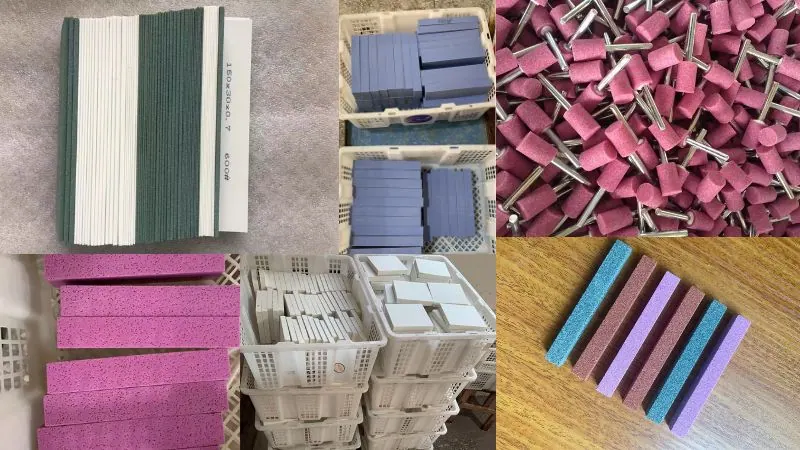
Serving as precise, sacrificial dressing tools, oil stones (dressing sticks) carefully erode the softer bonding material of superabrasive wheels. By selectively stripping away the clogged resin or metal binder, the stone safely exposes the sharp, underlying superabrasive crystals to restore maximum cutting efficiency for high-speed grinding operations.
Exposing Fresh Grits on Diamond Grinding Wheels
Diamond grinding wheels are incredibly tough. Machinists use them to grind extremely hard materials like tungsten carbide or advanced industrial ceramics. However, during heavy grinding, the microscopic gaps between the diamond grits fill up with melted material. This clogging is known as “loading.” Additionally, the exposed diamond points eventually become dull. When a wheel is loaded or dull, it simply rubs the workpiece, causing dangerous friction and heat.
How do you fix a loaded diamond wheel? You must remove the clogged material and the top layer of the bonding matrix. This is exactly where specialized oil stones, often called dressing sticks, step in. Operators press the stone directly into the spinning diamond wheel. The abrasive stone breaks down the resin or vitrified bond holding the diamonds.
Think of using a stiff wire brush to aggressively scrub away soft, melted welding slag to reveal the hard, solid weld bead underneath. The dressing stone works in a very similar way. It wears away the softer resin or vitrified bond to reveal the fresh, sharp diamond crystals. Usually, machinists select a white aluminum oxide dressing stick4 for this process. Generally, the stick should be one or two grit sizes finer than the grinding wheel itself.
Restoring Exact Geometry on CBN Wheels
Cubic Boron Nitride (CBN) is another powerful superabrasive. Manufacturers primarily use CBN wheels5 to grind hardened tool steels and high-speed steel (HSS) components. Over time, the wheel can lose its true shape or the flat cutting face becomes glazed and loaded with metal swarf. If the wheel surface is compromised, the final machined part will fail strict tolerance checks.
While heavy-duty mechanical truing devices (using rotary truing wheels) are required to correct major out-of-roundness, fine silicon carbide oil stone6 (dressing sticks) play a critical role in the final conditioning and opening of the wheel. After a wheel is mechanically trued, it is often too smooth to cut effectively. Operators manually plunge the dressing stick into the spinning CBN wheel face. The friction safely strips away the glazed bonding material without damaging the extremely hard CBN grains.
Think of this process like chemical etching used in metallurgy to reveal the grain structure of a steel sample. The etching fluid selectively removes the softer matrix, leaving the hard structures visible. Similarly, the dressing stone “etches” away the bonding matrix, ensuring the CBN crystals are fully exposed and the micro-geometry of the wheel face is perfectly optimized for aggressive grinding.
Here is a quick breakdown of superabrasive dressing applications:
| Superabrasive Wheel Type | Target Workpiece Material | Primary Dressing Goal | Recommended Oil Stone Material |
|---|---|---|---|
| Diamond Wheels | Tungsten carbide, ceramics, glass | Removing clogged swarf, exposing fresh grit | White Aluminum Oxide |
| CBN Wheels | Hardened tool steels, cast iron | Opening the bond, finalizing micro-geometry | Green Silicon Carbide |
By maintaining fully exposed and properly conditioned grinding faces, machinists prevent dangerous vibrations and ensure the grinding machine produces perfectly accurate industrial parts every single time.
Standardized Operating Best Practices
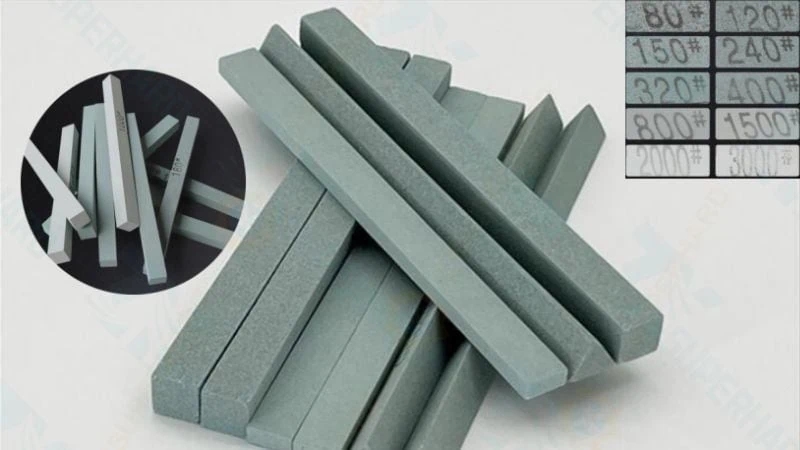
Operators maximize oil stone performance by strictly standardizing their daily usage parameters. This requires selecting the precise honing oil viscosity for fluid clearance, calculating the correct applied pressure to prevent structural fracturing, and implementing safe, highly effective cleaning protocols to remove loaded metal swarf.
Selecting the Correct Honing Oil Viscosity
Choosing the right honing oil is critical for continuous cutting. Viscosity7 measures how thick or thin a fluid is. If the oil is too thick, the stone simply glides over the metal surface without cutting. If the oil is too thin, it fails to lubricate. Consequently, the stone wears out rapidly and generates excessive heat.
Think of the high-pressure coolant system on a CNC lathe. When deep-hole drilling, you need a thin, high-pressure fluid to rapidly flush chips out of the deep hole. Honing oil works exactly the same way. It must wash away the microscopic metal chips before they clog the stone.
For example, when machining soft, sticky metals like aluminum with a fine 600-grit stone, operators usually select a very thin oil. A viscosity around 5 to 10 cSt (Centistokes) works well here. This light fluid quickly washes away the sticky aluminum dust. Conversely, roughing cast iron with a 150-grit stone requires a heavier oil to cushion the aggressive cutting action.
Managing Applied Pressure to Prevent Stone Breakage
Industrial oil stones utilize a hard vitrified or resin bond. This bond holds the abrasive grains together. While very hard, these stones are also brittle. Applying incorrect pressure leads to catastrophic tool failure or poor surface finishes.
Applying too much pressure will instantly snap the stone. This ruins the tool and can severely scratch the expensive workpiece. On the other hand, applying too little pressure is equally bad. Without enough force, the abrasive grains will not fracture and sharpen themselves. Instead, they become dull and simply rub the metal. This rubbing action is called “glazing.” It acts exactly like feeding a carbide end mill too slowly into stainless steel. The tool just rubs, generates massive heat, and quickly work-hardens the material.
Operators must match the pressure to the stone’s specific hardness grade.
| Applied Pressure Level | Cutting Action Result | Risk to Oil Stone |
|---|---|---|
| Too Low (< 30 PSI) | Stone glazes and stops cutting; high heat generation. | Minimal risk of breakage, but rapid dulling. |
| Optimal (50 – 80 PSI) | Grains micro-fracture perfectly, exposing new sharp edges. | Normal, controlled wear rate. |
| Too High (> 100 PSI) | Abrasive bond crushes; severe gouging of the workpiece. | High risk of the stone snapping or crumbling. |
By monitoring machine gauges and standardizing the pressure settings, workshops prevent unnecessary stone breakage and maintain consistent cutting cycles.
Cleaning Protocols to Prevent Abrasive Loading
Over time, microscopic metal chips get wedged into the open pores of the oil stone. This condition is called “loading.” A heavily loaded stone looks like it has a solid silver stripe running down its face. When a stone loads, it stops acting like a cutting tool. Instead, it becomes a smooth metal roller. To restore cutting power, operators must implement strict cleaning protocols, as wiping with a dry rag is completely ineffective.
Safety Warning: Oil stones are highly porous and absorb honing fluids. Never soak an oil stone in flammable solvents (like mineral spirits) and place it into a heated ultrasonic cleaner. The combination of heat, ultrasonic cavitation8, and flammable vapor creates a severe explosion hazard.
Instead, workshops should use specialized industrial cleaning systems. A highly effective and safe method involves using a heated ultrasonic tank (e.g., 140°F / 60°C) filled strictly with a non-flammable, heavy-duty aqueous alkaline cleaner. The alkaline solution safely breaks down the oil, while the microscopic bubbles generated by the ultrasonic waves violently push the trapped metal chips out of the stone’s pores. Once cleaned in the water-based solution and thoroughly dried, the oil stone returns to its original, aggressive cutting state safely.
Conclusion
Industrial oil stones are far more than simple sharpening tools; they are highly engineered abrasive components vital to precision manufacturing. Whether it is removing the toughest EDM recast layers in mold making, generating exact cross-hatch patterns inside hydraulic cylinders, or carefully restoring the geometry of superabrasive grinding wheels, oil stones provide the rigid accuracy that modern industries demand. By understanding their specific applications and strictly adhering to operational best practices—such as managing applied pressure and maintaining safe, effective cleaning protocols—manufacturers can significantly improve their surface finishes, extend tool life, and ensure operational consistency across the factory floor.
- Electrical Discharge Machining (EDM)1 – Wikipedia page explaining the Electrical Discharge Machining process and its applications.
- Roughness Average (Ra)2 – Wikipedia article defining surface roughness parameters and the Ra measurement standard.
- Inconel3 – Wikipedia page detailing the properties and machining characteristics of the Inconel superalloy family.
- white aluminum oxide dressing stick4 – ZYDiamondTools product page for White Aluminum Oxide (WA) dressing sticks used for diamond wheels.
- CBN wheels5 – ZYDiamondTools complete guide on CBN grinding wheels, their construction, and applications.
- silicon carbide oil stone6 – ZYDiamondTools product page for Green Silicon Carbide (GC) dressing sticks for diamond and CBN grinding wheels.
- Viscosity7 – Wikipedia article explaining fluid viscosity, kinematic viscosity, and fluid dynamics.
- ultrasonic cavitation8 – Wikipedia article detailing ultrasonic cleaning technology and the principles of acoustic cavitation.