-
Whatsapp: +86 13526572721
-
Email: info@zydiamondtools.com
-
Address: AUX Industrial Park, Zhengzhou City, Henan Province, China
-
Whatsapp: +86 13526572721
-
Email: info@zydiamondtools.com
-
Address: AUX Industrial Park, Zhengzhou City, Henan Province, China

CVD Dressers: Technical Specs and Selection Guide
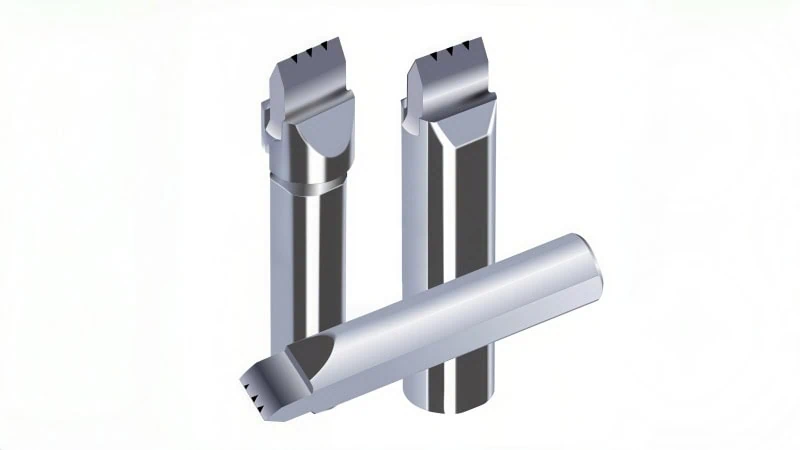
CVD dressers1 utilize synthetic polycrystalline diamond logs and wafers to deliver uniform wear rates and high thermal stability, effectively replacing mined diamonds. They enable precision truing and dressing by maintaining constant contact areas through self-sharpening micro-fractures, ensuring predictable tool life for automated manufacturing.
Why CVD Materials Are Replacing Natural Diamonds in Dressing
CVD dressers provide superior process consistency because their polycrystalline structure allows for self-sharpening, maintaining a constant contact area throughout the tool’s life. Unlike natural diamonds, CVD materials are free from impurities and binders, offering higher thermal stability and predictable wear rates that are essential for automated precision grinding.
Self Sharpening Characteristics for Consistent Dressing Rates
The primary reason engineers choose Chemical Vapor Deposition2 (CVD) tools is the behavior of the diamond crystal structure. Natural diamonds are single crystals. As you use a natural diamond, the tip gradually wears down into a flat surface. This wear changes the contact area between the dresser and the grinding wheel. Consequently, the sharpness of the wheel changes over time, leading to inconsistent surface finishes on your parts.
In contrast, CVD diamond is polycrystalline. This means it is made of millions of tiny diamond crystals bonded together. When the dresser hits the grinding wheel, it does not just wear smooth. Instead, microscopic diamond particles fracture and break away. This process reveals fresh, sharp diamond edges underneath.
Consider a standard ceramic grinding wheel. It works by shedding dull grains to expose sharp new ones to maintain cutting action. CVD diamond functions in a similar way. Because of this micro-fracturing action, the dresser stays sharp naturally. It does not develop a large “wear flat” as quickly as a natural diamond.
Therefore, the active width of the dresser remains stable. A stable dresser ensures that your grinding wheel receives the same texture every time you dress it. This consistency is vital for maintaining tight tolerances in mass production.
Superior Thermal Stability in High Temperature Environments
Dressing a grinding wheel generates intense heat. This heat is the main cause of failure for many diamond tools. Natural diamonds often contain small pockets of impurities or metallic inclusions inside the crystal lattice. When the temperature rises during aggressive dressing, these internal impurities expand at a different rate than the diamond. This expansion creates internal stress, eventually causing the natural diamond to crack or shatter.
CVD diamond does not have this weakness. It is synthesized in a controlled environment, resulting in a material that is almost 100% pure carbon without a metallic binder phase. Because there are no metallic impurities to expand, CVD diamonds possess exceptional thermal stability.
Comparison of Thermal Properties
| Feature | Natural Diamond | CVD Diamond |
|---|---|---|
| Crystal Structure | Single Crystal (Anisotropic) | Polycrystalline (Isotropic) |
| Impurity Content | Variable (contains inclusions) | High Purity (no binder phase) |
| Thermal Limit | Begins to oxidize/crack ~700°C | Stable up to ~1,200°C (in inert gas) |
| Wear Mechanism | Flattens / Polishes | Micro-fractures / Self-sharpens |
Note: Thermal limits can vary slightly depending on the specific synthesis method used by the manufacturer. Always check with your supplier for the exact temperature ratings of their specific CVD grades.
This high thermal resistance allows CVD tools to withstand the high friction generated when dressing hard, vitrified bonds. They can maintain their integrity even if the coolant supply is momentarily interrupted or insufficient, reducing the risk of sudden tool failure.
Cost Efficiency and Supply Chain Stability
The industrial shift to CVD is also driven by supply chain logic. Natural diamonds are mined from the earth. Therefore, their quality, shape, and availability vary significantly from stone to stone. One shipment might contain hard, durable diamonds, while the next might have stones with hidden defects. This variability makes it difficult to automate processes. A CNC grinder cannot automatically adjust itself if one diamond wears out twice as fast as the previous one.
CVD materials are lab-grown. Manufacturers produce them in large batches with strictly controlled parameters. This results in a material with uniform hardness and consistent wear resistance across every single log or wafer.
Benefits of Lab-Grown Consistency:
- Predictable Tool Life: You can accurately calculate when to change the tool, preventing machine downtime.
- Inventory Reduction: You do not need to stock “backup” stones in case of premature failure.
- Fixed Costs: The price of CVD is based on manufacturing costs, not the fluctuating mining market.
By eliminating the variables of nature, CVD dressers allow manufacturing plants to standardize their dressing operations. This standardization is the key to achieving “lights-out” manufacturing, where machines run unattended with high confidence.
Standard Configurations and Material Specifications
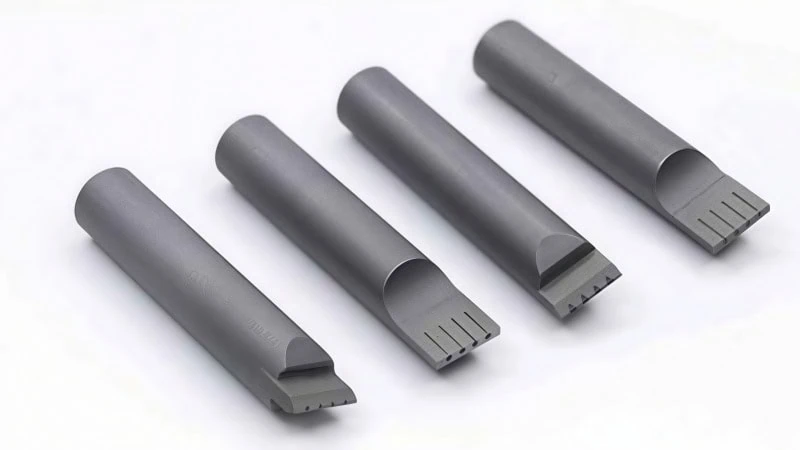
CVD diamond for dressing applications is manufactured in two standard geometric configurations: Logs (rectangular prisms) and Wafers (thin plates). Logs are designed for single-point and multi-point stationary tools, typically featuring square cross-sections ranging from 0.4mm to 1.2mm. Wafers offer larger surface areas for blade tools and rotary dressers. These materials are further categorized by grain structure, ranging from fine-grain premium grades for high-precision radii to coarser economy grades for general abrasive truing.
CVD Logs for Single Point and Multipoint Tools
CVD Logs are the most common form found in machine shops. Imagine a small, rectangular bar of pure diamond. These “logs” are laser-cut from a larger diamond growth disc into long, narrow prisms.
They are specifically engineered to replace traditional natural diamond needles or “phonopoints.” Because they are cut with lasers, their dimensional tolerance is extremely precise. A standard log is usually rectangular in shape. This shape is critical because it allows the diamond to be securely mounted into a steel shank with a consistent orientation.
Common Industrial Dimensions
| Cross Section (mm) | Standard Lengths (mm) | Typical Application |
|---|---|---|
| 0.4 x 0.4 | 3.0 – 5.0 | Fine finishing; small internal grinding wheels |
| 0.6 x 0.6 | 3.0 – 5.0 | General purpose; medium grit wheels |
| 0.8 x 0.8 | 4.0 – 6.0 | Heavy duty; larger external cylindrical grinding |
| 1.0 x 1.0 | 4.0 – 8.0 | Aggressive dressing; large surface grinding wheels |
| 1.2 x 1.2 | 5.0 – 8.0 | Extreme material removal operations |
In a single-point tool, one log is mounted at the tip. It functions like a turning tool on a lathe, traversing across the grinding wheel to trim it. In multipoint tools, several smaller logs are mounted side-by-side or in layers. This setup acts like a multi-tooth milling cutter, removing more abrasive material per pass but spreading the wear across multiple diamond edges.
CVD Wafers for Blade and Rotary Applications
While logs are long and narrow, wafers are wide and thin. Think of a wafer like a thin carbide insert used for parting-off operations, but made of solid diamond.
Wafers are used when the application requires a long, continuous cutting edge rather than a single point. This is essential for blade dressers. A blade dresser holds the wafer vertically. As the tool wears down, the profile remains a constant thin line. This is particularly useful for forming very deep, narrow grooves in a grinding wheel, which a standard log could not reach without the steel shank hitting the wheel.
Key Dimensional Characteristics:
- Thickness: Typically ranges from 0.3mm to 1.0mm.
- Width/Length: Can be much larger than logs, often 3mm x 3mm up to 10mm x 10mm plates.
Wafers are also the primary component in Rotary Dressers (Rolls). In this application, dozens of small CVD wafers are set around the perimeter of a metal wheel. This creates a “cutter” that looks somewhat like a facemill. When this diamond roll spins against the grinding wheel, the wafers chop through the abrasive grain. Because the wafers are uniform, they provide a very stable reference diameter for the rotary roll, which is critical for CNC profile grinding.
Understanding Grain Structure and Hardness Grades
Not all CVD diamond is the same. Just as steel comes in different grades (like mild steel vs. tool steel), CVD diamond comes in different quality levels defined by its grain structure.
CVD is grown atom by atom in a chamber. The resulting material is polycrystalline. This means it is a solid block made of many tiny crystals grown together. The size and orientation of these crystals determine the “Grade” of the diamond.
1. Premium Grade (Fine Grain)
This material has a very tight, small grain structure. It is extremely dense.
- Properties: High fracture strength and exceptionally smooth wear.
- Best Use: High-precision profile dressing where holding a sharp corner radius is critical. If you are grinding a complex shape on an aerospace part, you need Premium Grade to ensure the dresser doesn’t chip on the edge.
2. Economy Grade (Coarse Grain)
This material is grown faster, resulting in larger individual crystals within the block.
- Properties: Slightly lower fracture strength but excellent abrasive wear resistance. It is more prone to micro-chipping than premium grades.
- Best Use: Straight dressing of large wheels where surface finish requirements are standard. It is the cost-effective workhorse for general roughing operations.
Comparison to Carbide Grades
To use a workshop analogy, think of the difference between C-2 Micrograin Carbide and Standard C-5 Carbide.
- Premium CVD is like Micrograin Carbide: tough, holds a sharp edge, used for precision end mills.
- Economy CVD is like Standard Carbide: hard and durable, but better suited for general turning where edge toughness is less critical than bulk wear resistance.
How to Select the Correct Specification for Your Operation
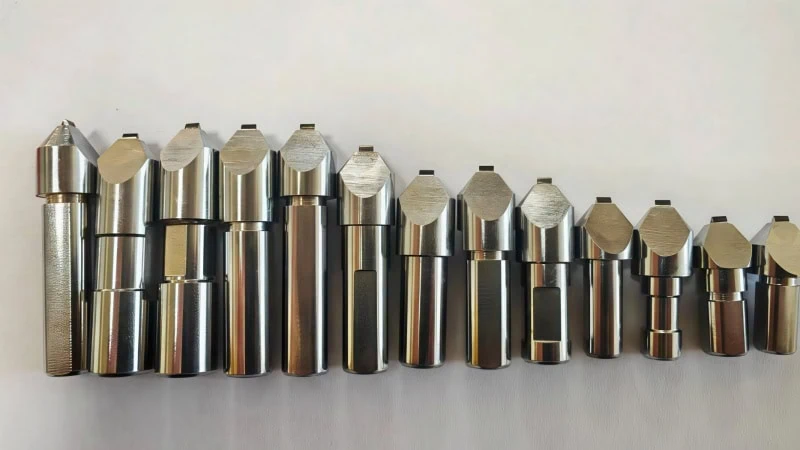
Selecting the correct CVD specification requires matching the log’s cross-section to the tool shank pocket, calculating the active diamond length based on the grinding wheel’s width and grit size, and validating supplier quality through optical inspection of grain density. Correct selection ensures the tool withstands dressing forces without vibration or premature wear.
Matching Log Dimensions to Shank Requirements
When ordering a CVD dresser, the first physical constraint is the tool holder or “shank.” The CVD log is not welded directly to the steel; it is sintered into a powder metal matrix at the tip of the shank. The size of the log must correspond to the pocket size in your existing tool holders.
If you select a log that is too small for the shank’s pocket, the metal matrix layer becomes too thick. In machining terms, this is similar to having excessive overhang on a boring bar. The thick layer of soft matrix cannot support the diamond rigidly. Under grinding pressure, the diamond may vibrate or be pulled out entirely.
Conversely, a log that is too large may not allow for enough matrix powder to surround it. This results in a weak bond, leading to tool failure.
Recommended Log Sizes for Standard Shank Diameters
| Shank Diameter | Recommended Log Cross-Section | Support Requirement |
|---|---|---|
| ¼” (6.35mm) | 0.4mm x 0.4mm | Light duty; requires minimal matrix support. |
| 3/8″ (9.5mm) | 0.6mm x 0.6mm | Medium duty; standard industry balance. |
| 7/16″ (11.1mm) | 0.8mm x 0.8mm to 1.0mm x 1.0mm | Heavy duty; requires substantial backing matrix. |
| ½” (12.7mm) | 1.0mm x 1.0mm to 1.2mm x 1.2mm | Severe duty; demands maximum surface area grip. |
Note: Shank pocket designs vary significantly between tool manufacturers. Always measure the pocket width of your specific tool holders or consult the manufacturer’s drawing before ordering logs.
Calculating Required Active Length Based on Wheel Width
Once you have the cross-section (width), you must determine the correct length of the CVD log. This is often driven by the width of your grinding wheel. The “Active Length” refers to the usable diamond material that can be consumed before the tool reaches its steel shank.
A wider grinding wheel acts like a larger heat sink, but it also generates more friction and wear per dressing pass. A dresser traversing a 100mm wide wheel spends twice as much time in contact with the abrasive as one traversing a 50mm wheel.
If you use a short log (e.g., 3mm length) on a wide wheel, the heat cycle is too short for the diamond to cool down effectively. Furthermore, the volume of diamond is consumed too quickly, forcing frequent tool changes. This defeats the purpose of automation.
Selection Guide: Wheel Width vs. Log Length
- Narrow Wheels (<25mm): A standard 3mm or 4mm length is sufficient. The traverse time is short, keeping heat generation low.
- Medium Wheels (25mm – 50mm): Upgrade to a 5mm length. This provides enough mass to dissipate heat during the longer cut.
- Wide Wheels (>50mm): Use 6mm to 8mm lengths. On wide centerless grinding wheels, the extra length acts as a thermal buffer. It ensures the diamond tip does not overheat before completing the full pass across the wheel face.
Think of this like selecting an end mill for a deep pocket. You would not use a short-flute end mill to cut a deep wall because you need enough tool body to absorb the cutting forces and evacuate heat. Similarly, you need enough diamond “body” to handle the energy of a wide wheel.
Evaluating Supplier Quality Criteria
Since CVD is a manufactured product, quality depends on the synthesis process. Before putting a new batch of dressers into your machine, you should perform a visual incoming inspection. You do not need a lab; a standard 10x or 20x shop loupe is sufficient.
What to Look For:
- Rectangularity:
Look at the end of the log. It should be a perfect rectangle or square. If the sides are trapezoidal (slanted), it indicates poor laser cutting. Trapezoidal logs are difficult to orient correctly in the tool shank, leading to off-center wear. - Inclusions (Black Spots):
Hold the log up to a strong light. High-quality CVD should appear translucent or slightly yellowish. If you see distinct black spots inside the crystal, these are non-diamond carbon inclusions. These spots are soft points. When the dresser wears down to that spot, the tip will suddenly collapse, potentially damaging your grinding wheel. - Edge Chipping:
Inspect the long edges of the log. They should be sharp and crisp. If the edges are jagged or micro-chipped right out of the box, the material may be too brittle (low fracture toughness). This often happens with lower-grade “economy” CVD. A chipped edge will leave “feed lines” or spiral marks on your grinding wheel, which will transfer directly to your workpiece surface finish.
Application Best Practices for Extended Tool Life
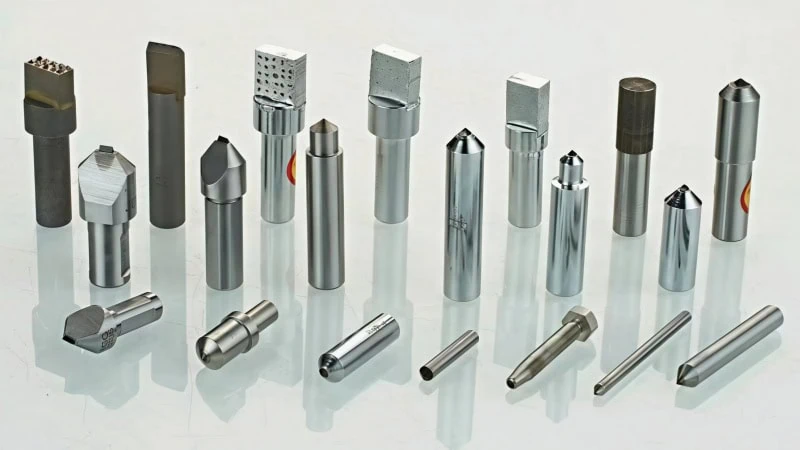
To maximize CVD tool life, operators must maintain a rigid drag angle of 10 to 15 degrees to promote self-sharpening, limit per-pass infeed to 0.025mm to prevent fracture, and ensure high-velocity coolant is applied directly at the contact zone to avoid graphitization.
Setting Optimal Feed Rates and Depth of Cut
The lifespan of a CVD dresser is directly controlled by the mechanical load you place on it. Two specific parameters determine this load: the infeed (depth of cut) and the traverse rate (feed rate).
Because CVD diamond is a ceramic-like material, it is incredibly hard but lacks the elasticity of steel. Therefore, it is sensitive to impact. If you set the depth of cut too deep, the sudden shock when the diamond hits the wheel can cause the log to snap. This is similar to running a carbide end mill into a workpiece too aggressively; the cutter will chip rather than cut.
Recommended Cut Parameters
| Operation Type | Max Depth of Cut (per pass) | Traverse Rate Target |
|---|---|---|
| Rough Dressing | 0.020mm – 0.030mm | High (Open Structure) |
| Finish Dressing | 0.005mm – 0.010mm | Low (Closed Structure) |
| Spark-Out | 0.000mm (Dead Pass) | Very Low |
Note: These parameters are specifically optimized for vitrified aluminum oxide and silicon carbide wheels. CVD logs are generally not recommended for dressing Diamond or CBN superabrasive wheels3 due to excessive wear rates. For superabrasive applications, rotary dressing systems are typically required.
The Overlap Factor
The traverse rate also defines the surface finish of the wheel. This is often calculated as the “Overlap Ratio.”
If the dresser moves too fast across the wheel, it cuts a spiral groove, like a thread on a screw. This makes the wheel aggressive but leaves a poor finish on the part. If it moves too slow, it dulls the abrasive grains, causing the wheel to “glaze” and burn the workpiece.
For CVD tools, a consistent, medium feed rate is best. It allows the micro-fracturing process to happen naturally, keeping the diamond sharp without overloading it.
Cooling Requirements to Prevent Graphitization
Although CVD diamond is thermally stable, it is not immune to heat damage. At extremely high temperatures (above 700°C in the presence of oxygen), diamond begins a chemical reversal called graphitization4. The hard diamond crystal structure basically unzips and turns into soft black graphite powder.
Once graphitization starts, the tool wears away rapidly. To prevent this, coolant application is critical. The goal is not just to “get it wet,” but to break the air barrier.
A spinning grinding wheel carries a layer of air around with it, known as the “air barrier.” If your coolant pressure is too low, this air barrier deflects the liquid away from the cutting zone. The diamond might look wet, but it is actually cutting dry and burning up.
Proper Nozzle Setup:
- Pressure: The coolant pressure must be high enough to penetrate the wheel’s air stream.
- Position: Aim the nozzle specifically at the interface where the diamond touches the wheel, not just vaguely at the wheel face.
- Timing: Never turn the coolant off while the diamond is in contact with the wheel. Thermal shock occurs if a hot diamond is suddenly hit with cold water, which can cause immediate cracking.
Proper Orientation Relative to the Grinding Wheel
The physical angle at which you mount the tool determines whether the CVD log will self-sharpen or just rub against the wheel.
The Drag Angle
You should always mount the dresser with a “drag angle” (also called a negative rake angle).
Imagine using a turning tool on a lathe. If you position the tool with a neutral or positive angle and push it into a hardened material, it tends to “dig in” and chatter. By angling the tool holder so the insert trails behind (negative rake), the cutting forces are directed into the mass of the tool holder, creating a stable cut.
Similarly, the CVD tool should “trail” behind the mounting point. The industry standard is typically a 10° to 15° inclination relative to the wheel center.
Why is this angle critical?
- Vibration Control: A vertical (0°) position creates instability, acting like a boring bar with excessive stick-out. This vibration creates chatter marks on the dresser, which will transfer directly to the grinding wheel, and then to your final part.
- Self-Sharpening: The angle forces the wear to occur on the bottom edge of the CVD log. As the log wears, the drag angle helps the diamond micro-fracture cleanly. If the tool is flat, the wear area becomes too large, leading to excessive friction.
Rotation Strategy
Unlike a single-point natural diamond which is often conical, a CVD log is rectangular. You do not rotate it 360 degrees. Instead, once the leading edge is worn, you typically rotate the tool 180 degrees. This presents the fresh, sharp edge on the opposite side of the log to the grinding wheel.
Conclusion
The transition from natural diamonds to CVD dressers is more than just a material swap; it is a move towards standardized, predictable manufacturing. By offering superior thermal stability, consistent self-sharpening wear rates, and precise availability of logs and wafers, CVD materials solve the variability problems inherent in mined stones.
However, realizing these benefits requires a technical approach to selection and application. Success depends on matching the specific grain structure and log dimensions to your grinding wheel width and shank requirements. Furthermore, operators must respect the material’s ceramic nature by maintaining correct drag angles, controlling infeed depths, and ensuring aggressive cooling. When these technical specifications and best practices align, CVD dressers deliver the long-term consistency required for modern, automated grinding operations.
- CVD dressers1 – ZYDiamondTools product page featuring Chemical Vapor Deposition diamond dressing tools.
- Chemical Vapor Deposition2 – Wikipedia article explaining the fundamental CVD manufacturing process.
- Diamond or CBN superabrasive wheels3 – ZYDiamondTools category page for Diamond and CBN grinding wheels.
- graphitization4 – Wikipedia entry describing the transformation of carbon into graphite.